Tag: copper

  • Phtalates heavy metals pregnancy

    Copper is a heavy metal and is needed for myelin development. [1-3] Surely too much of a good thing is bad. Often other heavy metals follow copper. A study out of Rhode Island USA correlated neurological health with placental heavy metal concentration. [4] A study out of Taiwan looked at heavy metals and phtalates in the urine of pregnant mothers. [5] Both studies correlated heavy metals with mental functioning of the children. Phtalates are used in the production of plastics. When an expecting mother has concerns about heavy metals in the town’s water supply she drinks more bottled water right? This post makes a weak attempt to explain the statistics used in the Rhode Island and Taiwan studies. The take home is that prenatal copper is likely a good thing. Phthalates are probably bad. You really need to discuss the issue with someone licensed to practice medicine.

    1. Copper deficiency and myelin
    2. Copper excess a bad thing?
      1. In Rhode Island USA
        1. Defining profile behaviors
        2. Heavy metal levels by profile groups
      2. In Taiwan
        1. confounding graphs
        2. Spearman correlation coefficients
        3. phthalates and metals in combo
        4. Spearman correlations and hypothetical graphs
    3. Other sites on prenatal copper
    4. Talk to your healthcare provider
    5. References

    Copper deficiency and myelin

    Copper is essential to prenatal development of all organ systems. [1] Recently copper deficiency has become more prevalent due to zinc supplementation and bariatric surgery. [1] This same review claims that persistent structural changes can occur that supplementation after birth may not repair the damage. [1] In a 1976 rat study copper deficiency induced by a low copper diet for three generations of rats. [2] These authors demonstrated reductions in the yield of myelin (56%), brain weight (11%), and body weight (43%) in F2 generation rat pups nursed by their own copper-deficient mothers. [2] The myelin associated glycoprotein appeared to have a higher molecular weight. Normal myelin weight was restored when the pups were allowed to nurse from a healthy mother that was not copper deficient. [2] Brain and body growth were not restored. [2] This postnatal copper replacement by a foster mother produced a normal yield of myelin per gram of brain tissue, but.

    Close to 50 years later Wikipedia authors have more to say about myelin associated glycoprotein MAG. The full length membrane associated protein is 100kDa, the cleaved portion is no long associated with the oligodendrocyte membrane. This image came from ResarchGate.
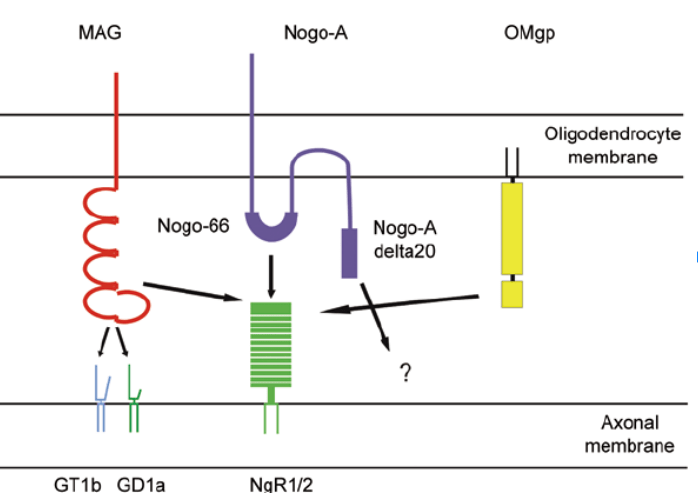
    Myelin inhibitors of axon regeneration. Myelin-associated glycoprotein (MAG) halts axonal regrowth by binding to the gangliosides GD1a or GT1b and/or Nogo receptors 2 and 1 (NgR 2/1). Neurite outgrowth inhibitor A (Nogo-A) contains two axonal outgrowth inhibitory domains, Nogo-66 and Nogo-A delta20. The receptor for Nogo-66 is NgR1, while the receptor for Nogo-A delta20 is unknown. Oligodendrocyte myelin glycoprotein (OMgp) inhibits axonal regrowth by binding to NgR as well.

    Lessons from the cuprizone model of MS

    Cuprizone is a copper chelator that that is used to induce experimental models of the demyelinating disease multiple sclerosis. On one many peer reviewed studies from this PubMed search [3] points to the mitochondria and Cu/Zn SOD as being targets.

    • Oligodendrocytes are the myelinating cells that increase in numbers during mid gestation. Copper deficiency leads to excess reactive oxygen species due to failure of Cu/Zn supreoxide dismuatase to scavenge and, secondly, rupture of mitochondia membrane, release of cytochrome C and apoptosis. [3] Cuprisone selectively decreases the mitochondria membrane potential of this cell type. [3]
    • Astrocytes help form the blood brain barrier and are responsible for uptake of excess neurotrasmitter. A Cuprizone activation of astrocytes may contribute to demyelination. [3]
    • Microglia are the macrophages of the brain. Cuprisone causes the accumulation of microglia and macrophage. [3]

    We hear a lot about copper toxicity? What gives?

    Copper excess a bad thing?
    The Rhode Island study measured the heavy metal content of the placenta and assessed the infants soon after birth.[4] The Taiwanese study measured the heavy metal content of the mother’s urine during pregnancy and assessed the children as toddlers. [5]

    The Rhode Island study suggests that low copper in the placenta is associated with worse category of neuro-behavior deficits. [4] The Taiwanese study suggests that high copper in the urine is associated with neurological issues in toddlers. [5]

    In Rhode Island USA

    Data from the Rhode Island Child Health Study (RICHS) population was used to test the hypothesis that placental heavy metals are associated with neurological problems. .NICU Network Neurobehavioral Scale (NNNS) was used to assess behavior issues in infants. [4]

    Figure 1 breaks the study population children into a series of functional Z scores.
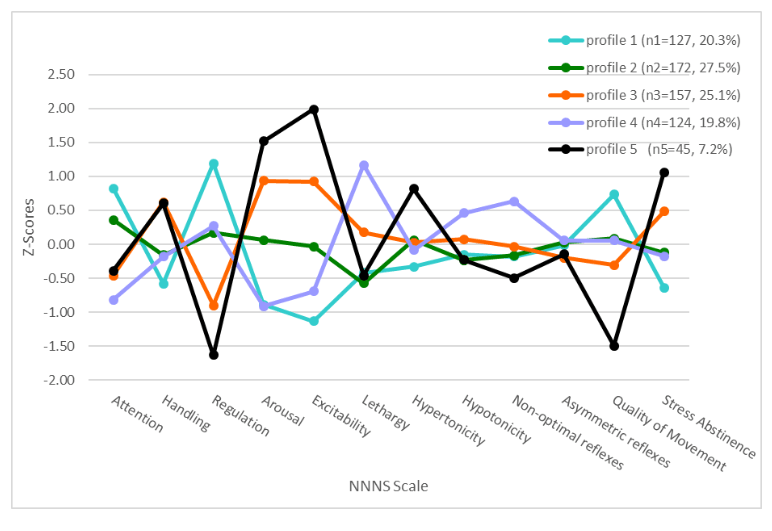
    1. highest attention, movement regulation, lower stress abstinence signs, less handling, excitability hypertonicity.
    2. typical neurobehavior, largest profile, overall average, except lowest in the lethargy scale.
    3. average performance of scales
    4. lethargy, hypotonicity, non-optimal reflexes, and lowest attention and arousal.
    5. most extreme regulation, arousal, excitability, hypertonicity scores, more non-optimal reflexes, lowest quality of movement and highest stress abstinence signs.

    Note that these are placental heavy metal concentrations.
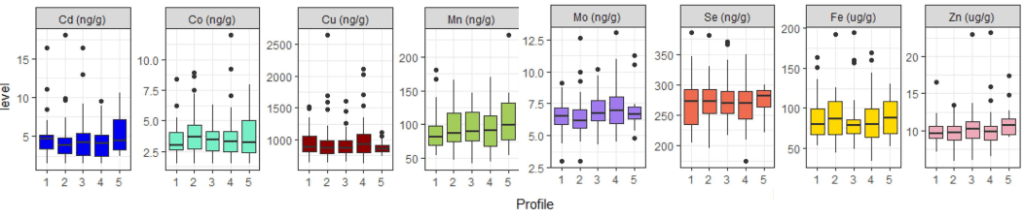
    These box and whisker plots show median (line through the box) and the boundaries of the 2nd and 3rd quartiles. The lines mark the 1st and 4th quartiles. The dots are outliers. Note that Cu is higher in the placenta of favorable profile 1 babies than in the unfavorable profile 5 babies. The odds ratio is described in greater detail in the overview of the Taiwanese study. In the Rhode Island study, Cu is the only metal to have an odds ratio less than 1. In other words, babies whose placenta have higher levels of Cu are less likely to have neurological issues.

    Copper was the only metal found in placentas that had a negative odds ratio of being associated with neurological issues.

    The Rhode Island study used something called the quantile g-computation approach to understand the association between metal mixture and NNNS profile 5 versus the other four profiles. The model assumes the linearity of simultaneously occurring metals some of which positively and some negatively affect the NNNS scores. Each exposure was given a positive or negative weight which add up to be 1. Cu showed the largest negative weight among the metals followed by selenium in the model adjusted for infant sex, age, and maternal race, BMI, and education status.
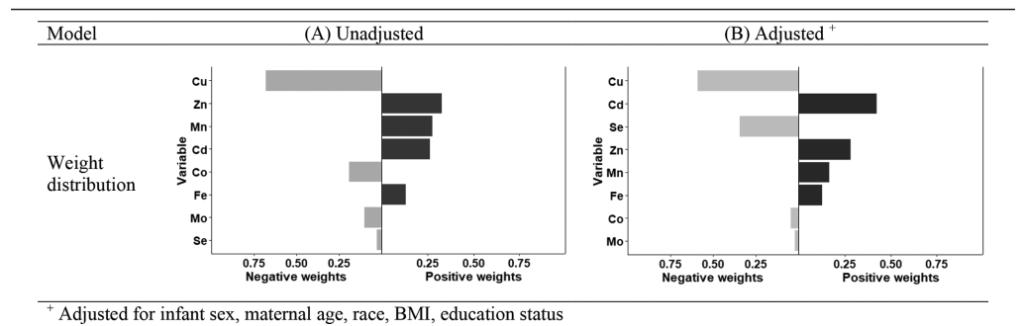
    The Rhode Island study discussed the role of Cu in development as well as other studies rationalized the importance of copper in neurological development.

    In Taiwan

    A Taiwanese study pregnant women and their single birth children and correlated psychiatric functioning with heavy metals and phthalate esters in the urine. [5] Phthalate esters are a class of plasticizers with an increase in consumer exposure. The authors claimed that prenatal exposure to Cu, dibutyl phthalate, and di-2-ethylhexyl
    phthalate was associated with child depressive problems and attention deficit/
    hyperactivity problems at 4 years of age. [5]

    Smoking and drinking are sometimes considered confounding variables. People who smoke are more likely to drink alcohol. These authors used a directed acyclic graph (DAG, Figure S1) to illustrate the confounding variables that they needed to adjust for:
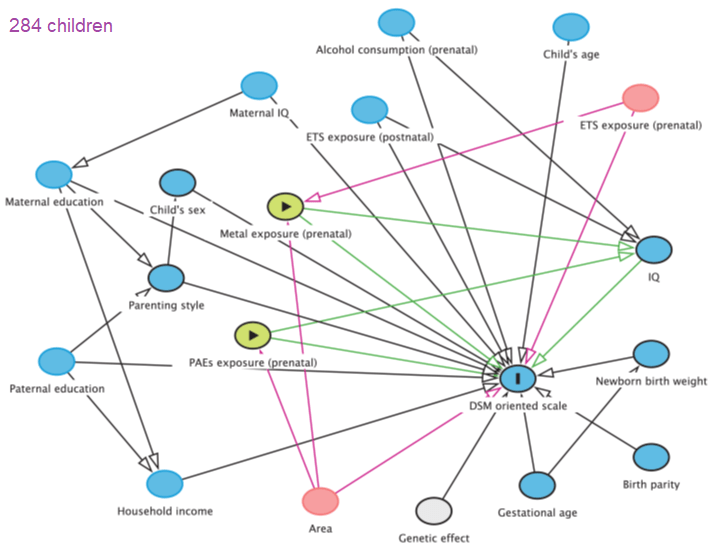
    The blue oval with the solid bar is the outcome measure: The green ovals with the arrows are the two environmental factors hypothesized to lead to mental health problems as measured by the Diagnostic and Statistical Manual of Mental Disorders, Fifth Edition (DSM-5) All of the other ovals are confounding variables.

    • prenatal environmental tobacco smoke ETS exposure (yes or no) and geographic area (central, southern, or eastern) for metals analysis, with adjusted geographic area for the analysis of PAEs.
    • Model 1 adjusted for child’s age and sex (boy or girl), maternal education level (≤12 years, 12–16 years, and > 16 years), birth parity (1, 2, or ≥3), gestational age, prenatal ETS exposure, and geographic area
    • Model 2 included the child’s IQ as measured by the Wechsler Preschool Primary Scale of Intelligence Fourth Edition

    The Spearman correlation coefficient is a way of correlating the relationship between two variables, the closer the R value is to1.0 (direct) or to -1 (inverse) the stronger the correlation. This coefficient assumes the data are monotonic. An example is given of non-monotonic data.


    The complexity of the situation is further illustrated in supplemental figure 2 which illustrates a rather sobering reality by presenting a table of Spearman correlation coefficients. All of the squares are green and blue indicating a positive correlation. The asterisk indicate the level of confidence. In simple lay terms * indicates that we are 95% confident that the observed correlation is not due to random chance, ** 99% confident.
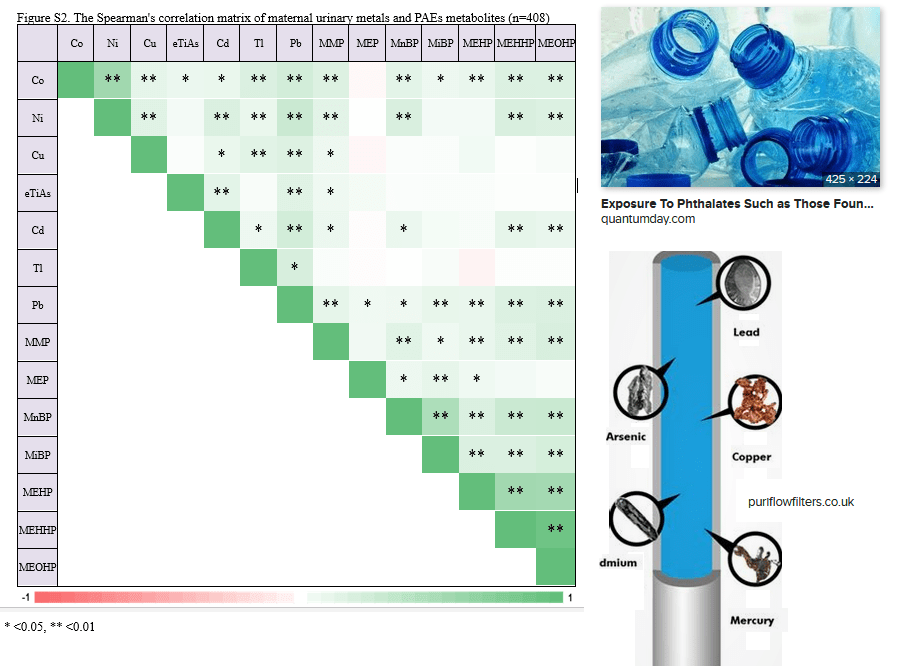
    Of course a mother peeing one phthalate metabolite is likely to be peeing others. If a mother lives in a region in which she knows the water is contaminated with heavy metals, she may be more likely to drink bottled water and become exposed to phthalates as well. According to this table, there is a positive correlation between the concentration of lead (Pb) in urine with the concentration of copper ( Cu), nickel (Ni), cadmium, (Cd) cobalt ( Co ), and total inorganic arsenic (eTiAs).

    β (SE) may refer to the median 50% value of a quartile with SE being the standard error.

    In statistics, p and q values are related entities. P values are the fraction of false positives whereas q values are the rate of false discovery. “To put this another way, p-values tell you the percentage of false positives to expect and take into account the number of tests being run. For example, if you run 1600 tests, you would expect to see about 80 false positives. The q-value doesn’t take into account all the tests; they only take into account the tests that are below a threshold that you choose (i.e. tests reporting a q-value of 5% or less).”

    An odds ratio (OR) is the ratio of the odds of two events occurring simultaneously.

    Spearman correlations and hypothetical graphs

    Note that the graphs on the left are not real data from the study. They are being presented to give the lay reader an idea of what the real data might look like based on the R values.
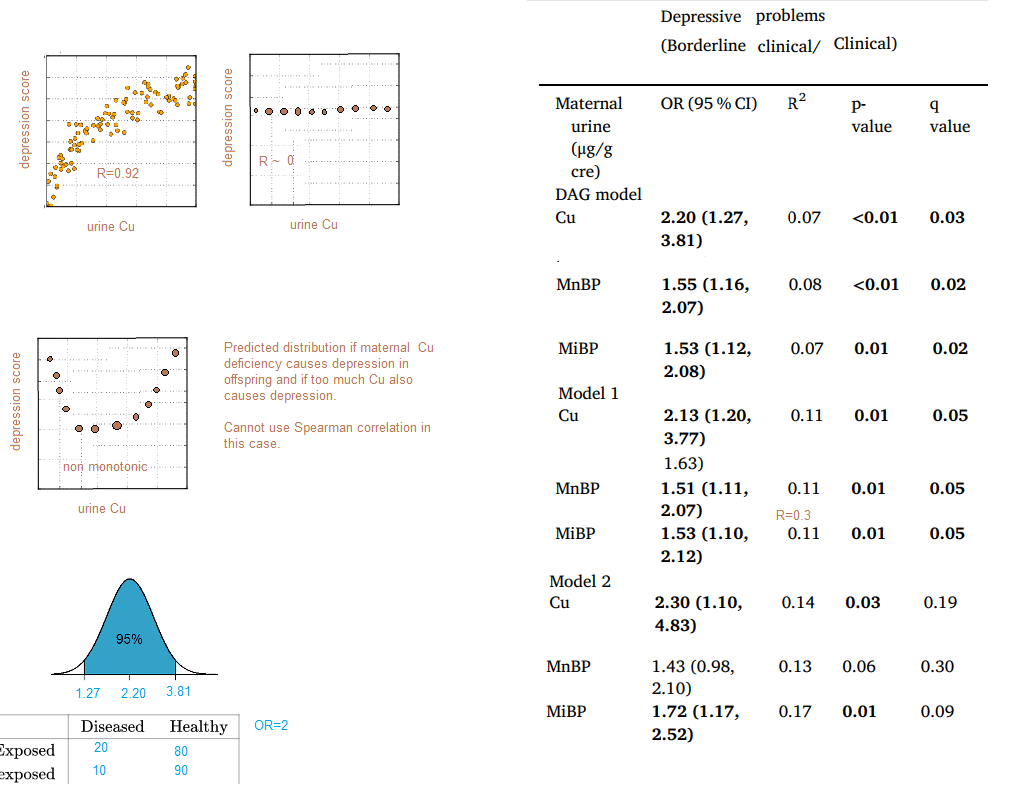
    One of the things that makes this publication is that the authors assume that the reader is an expert in statistics and at the same time they don’t actually who their Spearman correlation data graphically. A search of the PDF file of the manuscript for “monotonic” did not reveal whether or not this assumption was met. Reporting R2 rather than R is the topic of considerable Internet debate. The bottom line is that the data were not known. The authors certainly seem to have a firm understanding of statistics. It would just be nice to see the data because too little copper is known to cause problems.

    Other sites on prenatal copper

    • Being the Parent brings up some recommended daily allowance and a list of copper rich foods.
    • The Baby Center has similar information for expecting mothers and also advises a mother to talk to her doctor about the best supplement should her diet not contain enough copper.
    • This Mayo Clinic site turned up on an Internet search but didn’t say anything bout copper supplements during pregnancy.
    • What to Expect also gives the RDA for copper and a list of copper rich foods.
    • MindBodyGreen turned up in an Internet search of prenatal copper for unknown reasons. These authors stated that it is possible to get to much zinc but say nothing about too much zinc leading to copper deficiency. [1]

    Talk to your healthcare provider

    “Talk to your healthcare provider.” Is the obvious answer when sources of contaminants and getting proper amounts of trace elements seems to be overwhelming. Both the Rhode Island [4] and Taiwan [5] are public access for your healthcare provider to review with you.
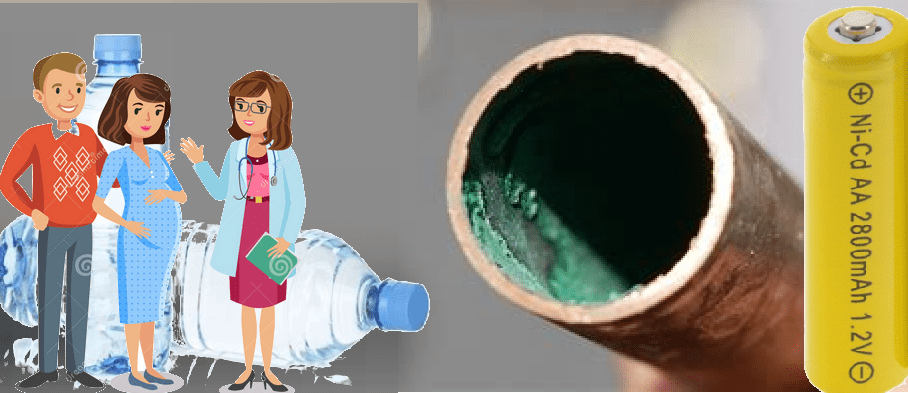
    A collage of sources of phthalate and heavy metal contamination and a pregnant couple talking to a healthcare provider.

    Things are crazy complicated that seem to become only more complicated when statistical analyses are used. Surely there is a common sense approach going back to days in which are soils were not copper depleted and heavy metal and plastic contamination were unknown.

    References

    1. Uriu-Adams JY, Scherr RE, Lanoue L, Keen CL. Influence of copper on early development: prenatal and postnatal considerations. Biofactors. 2010 Mar-Apr;36(2):136-52.
    2. Zimmerman AW, Matthieu JM, Quarles RH, Brady RO, Hsu JM. Hypomyelination in copper-deficient rats. Prenatal and postnatal copper replacement. Arch Neurol. 1976 Feb;33(2):111-9.
    3. Zirngibl M, Assinck P, Sizov A, Caprariello AV, Plemel JR. Oligodendrocyte death and myelin loss in the cuprizone model: an updated overview of the intrinsic and extrinsic causes of cuprizone demyelination. Mol Neurodegener. 2022 May 7;17(1):34. PMC free article
    4. Tung PW, Burt A, Karagas M, Jackson BP, Punshon T, Lester B, Marsit CJ. Prenatal exposure to metal mixtures and newborn neurobehavior in the Rhode Island Child Health Study. Environ Epidemiol. 2022 Jan 28;6(1):e194. PMC free article
    5. Tsai TL, Hsieh CJ, Wu MT, Chen ML, Kuo PH, Wang SL. Co-exposure to toxic metals and phthalates in pregnant women and their children’s mental health problems aged four years – Taiwan Maternal and Infant Cohort Study (TMICS). Environ Int. 2023 Feb 4;173:107804 free article
  • Oleuropein

    We at CopperOne have been telling customers to add cuprous niacin to an oil to keep it in the +1 oxidation state. Why not olive oil? Oleuropein is “the most important phenolic compound present in olive cultivars. It has a role as a plant metabolite, a radical scavenger, an anti-inflammatory agent, an antineoplastic agent, an antihypertensive agent, a NF-kappaB inhibitor, an apoptosis inducer, an antioxidant and a nutraceutical.”

    While olive leaves are the main source of oleuropein sold by neutraceutical sorts, olive oil is a common dietary source. We at CopperOne will not go there. We are just mentioning this because customers are intrested in the use of oils to keep their CopperOne in the plus +1 oxidation state.

    A high fat diet study and copper handling proteins

    Santini, S. J., Tarantino, G., Iezzi, A., Alisi, A., & Balsano, C. (2022). Copper-catalyzed dicarbonyl stress in NAFLD mice: protective effects of Oleuropein treatment on liver damage. Nutrition & metabolism, 19(1), 9. https://doi.org/10.1186/s12986-022-00641-z

    Mice were fed a normal or high fat diet for 8 weeks. At the end of this time mice were split into four different groups with four females and four males in each group

    Normal dietary oleuropein may be found in olive oil. Oleuropein has a carboxyl group (top) that may bind Cu2+. The authors conducted two 16 week experiments. The first gave a general background of a normal diet (ND) vs a high fat diet (HFD). There were 12 mice, 6 per group in the fist experiment. Had four groups with four males and four females in each group.
    • normal protein/carbohydrate/fat 24/58/18
    • high fat protein/carbohydrate/fat 15/43/42
    • normal diet plus 5.6 mg/kg body weight oleuropein
    • high fat plus 5.6 mg/kg body weight oleuropein

    About a third of the carbohydrates in the high fat diet came from sucrose. Values are in percent total food calories. The gap in the logic of this rather fascinating publication is the focus on methylglyoxylal, a byproduct of glycolysis.

    This image was adapted from publication on glyoxylase 1, a focus of the Santini publication that this post is reviewing. DHAP dihydroxyacetone phosphate, GA3P glyceraldehyce 3-phosphate, which feeds into the TCA cycle to produce reducing equivalents for the electron transport chain.

    Note the three blue nitrogens (Ns) on the side chain of arginine. They carry a positive charge. When methylglyoxal reacts with them, there is no longer a positive charge on the arginine side chain and whatever biochemical interactions that come from it.

    1. Why Cu2+ and a high fat diet are toxic

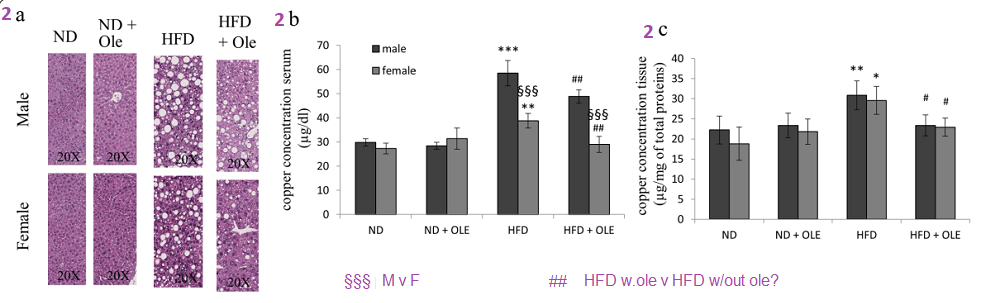
    What is frustrating is that we cannot easily determine what the oxidation state is of the copper is in the diet of these mice. Only small portions of the much larger H&E stained images are shown in the panel 1a presented in this post. The take home are the large fat droplets in the liver slices in the liver from a high fat diet (HFD) mouse.

    a. some close ups of H&E stained liver sections. The droplets are fats. b. copper is higher in the serum and the liver C only transcripts for the Ctr2 influx channel and the ATP7B efflux pump are increased.

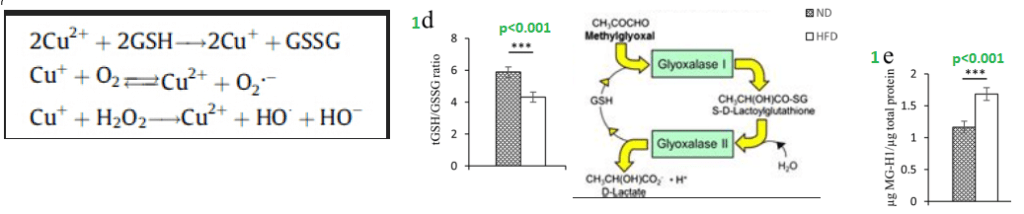
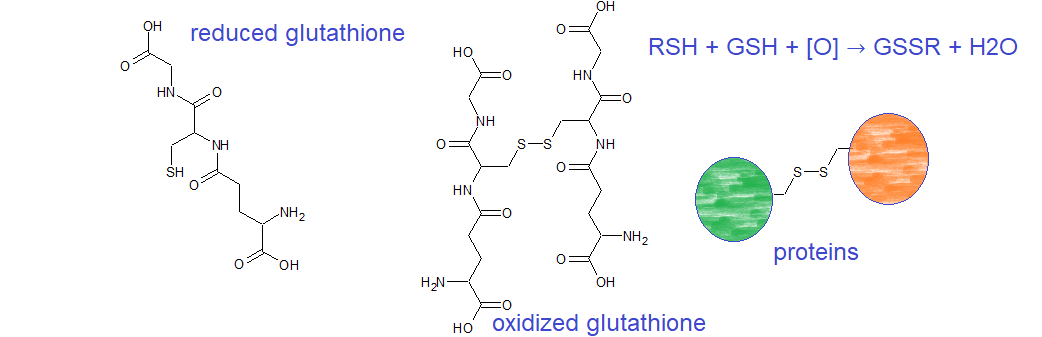
    The authors think that oleuropein is chelating Cu2+. Why does Cu2+ need to be chelated? For starters, Cu2+ may oxidize glutathione (GSH), a small molecule needed to maintain redox balance. Oxidized glutathione, GSSG, might also form mixed thiols with protein thiols, i.e. PSSG.

    From Santini 2022 with images added for visualization of mechanisms being examined.

    Glyoxylases are enzymes that detoxify methylglyoxal and other aldehydes before they have a chance to form adducts on proteins. They rely on reduced GSH for detoxification.

    The Code Before moving on to looking at bar graphs, this is the code the authors used to make comparisons:

    • * is a comparison between the ND (normal diet) and the HFD (high fat diet)
    • # is a comparison between HFD and HFD with oleuropein
    • § is a comparison between males and females
    • 3 symbols in a row, for example ####, means significant at the p<0.001 level
    • 2 symbols in a row, ##, means significant at the p<0.01 level
    • just one symbol, #, means significant at the p<0.05 level, or 95% certain that the observed difference is not due to random chance. The lower the p value, the more sure we are the results are not due to chance.

    2. Oleuropein blunts Cu accumulation

    Here the authors are only looking at hepatic and serum Cu. Other tissues were not examined, probably for practical reasons. Small sections of the larger H&E stains are shown only to make the point that a high fat diet results in lipid accumulation in the liver. Male female differences (§, 2c) are not seen in liver Cu content but are seen in the the serum (§, 2b). Oleuopein in the HFD( #, 2b) seems seems to be specific to the female serum but seen in both genders in determining hepatic Cu content (2c).

    Figure 2, click here if you have forgotten what the symbols mean.

    The male mice on the HFD seem to have the greatest elevation of serum copper. Oleuropein seems to blunt this increase. We do not know if this increase in serum copper is protective or detrimental. The changes in hepatic copper (2c) are really not that great.

    3 Ramping up of Cu+ channel translation

    Many times scientists look only at mRNA transcripts of a given gene because it is easy to perform quick and relatively inexpensive analysis of these transcripts. Not every protein for which transcript are produced in the nucleus get translated into proteins. The scientist has to use a technique known as Western blotting to quantify the levels of a given protein. This post will not show the Western blots. Oleuropein increases the Ctr1 protein levels in male and female mice fed a high fat diet at the p<0.05 level of significance. (#, 3b, second panel.

    Figure 3, click here if you have forgotten what the symbols mean.

    4 Getting Cu out and more GSH

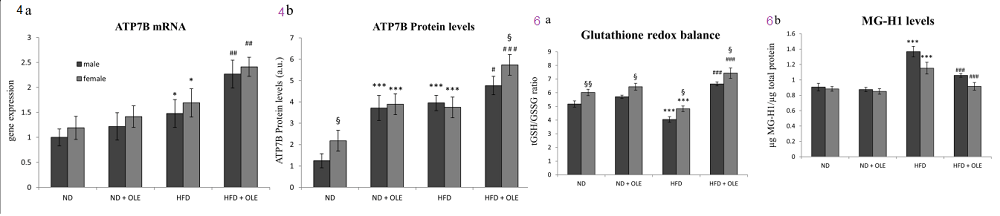
    Figure 1d,e speculated that the increase in Cu2+ with a high fat diet could cause GSH to decrease and methylglyoxylate to increase. This next figure combines Figures 4 and 6 from the study. Recall that ATP7B is the Cu+ efflux pump.

    Combined figures 2 and 6 from the Santini publication. The Western blot images have been removed for lay viewers. Click here if you have forgotten what the symbols mean.

    Oeuropein increases the protein levels of the Cu efflux pump (6b) in males and females, but more so in females. Similar improvements are seen in the increased ratio of GSH to GSSG (6a) and decreased MG-H1 levels.

    5. Three Cu chaperones

    This image was taken from Figure 5 of the Santini 2022 publication. Some images have been added to document the Cu cofactor enzymes that receive the Cu.

    Figure 5 from Santini (2022) Click here for the meaning of the symbols. Western blots used to measure protein levels have been removed for lay readers.

    Let’s concentrate on protein levels because not every mRNA transcript for a protein produced in the nucleus gets translated into a protein. Oleuropein really increases the transcripts for the Copper Chaperone for Superoxide dismutase (CCS) without a similar increase in actual protein levels (5b). Cu/Zn Superoxide dismutase scavenges the reactive oxygen species superoxide. Cox17 transfers Cu+ to cytochrome C oxidase in the mitochondria. We need this transfer for production of ATP. This transfer needs to occur to burn fat too! Finally, Atox1 transfers Cu+ to both Cu+ ATPases: ATP7A transports Cu into the cerebral spinal fluid for the brain and into the golgi for making secreted copper based enayzmes. ATP7B exports extra Cu into the bile.

    7 detoxifying methylglyoxal

    Figure 6 of the Santini publication was presented with Figure 4 because the authors propose that Cu2+ can catalyze the depletion of GSH that is used as a substrate for glyoxylate enzymes that detoxify aldehyde groups that are the precursors to advanced glycation end products. Panels 7a and 7b follow a logic similar to seen in previous figures from the Santini publication.

    1. An mRNA transcript is produced in the nucleus… doesn’t mean it gets translated into a protein
    2. Just because the ribosomes translate mRNAs into proteins… doesn’t mean they are active enzymes.
    3. Just because a protein is made, doesn’t mean it is active. It might require a post translational modification like attaching a phosphate group to a key amino acid. It might also require a cofactor, such as GSH in our case.

    Click here to go up to the cartoon of Glo1 and Glo2 enzyme action. Note that only Glo1 uses GSH. The authors added exogenous GSH in their assays so that lack of reduced GSH in the liver homogenate would probably not have been a factor.

    Figure 7 from Santini 2022.

    Santini and coathors presented one last piece of data suggesting which transcription factor oleuropein works via to produce more Glo1 and Glo2. Let’s first summarize what has been presented so far.

    Summary

    1. In a mouse model, a high fat diet decreases reduced glutathione that is needed for detoxifying protein modifying methylglyoxal. Toxic Cu2+ may be the reason.
    2. Oleuropein, a compound n olive oil, blunts Cu accumulation in the liver and serum. We don’t know if the Cu is getting to other tissues.
    3. Oleuropein increases mRNA transcripts for Cu+ channels Ctr1 and Ctr2. We at CopperOne think that this is a good thing.
    4. In mice fed a high fat diet, oleuropine increases the transcripts for the Cu+ efflux pump too. We don’t’ know about the Cu+ pump ATP7A that delivers Cu+ for making proteins that are exported from the cell.
    5. Oleuropein increases mRNA and Cu+ chaperone proteins themselves that deliver Cu+ to enzymes we need to make ATP, combat reactive oxygen species, and making critical Cu enzymes that are exported from the cell.
    6. Oeleuropein increases reduced GSH in mice on a high fat diet. The toxic glycolysis byproduct methylglyoxal is decreased too.
    7. Oleuropein increases the activity of enzymes that metabolize this toxic byproduct of too much sugar.

    Santini and coauthors have given us some insight as to why Cu2+ is toxic, particularly when we eat way too much sugar. We’ve been thinking of oils for keeping CopperOne in the +1 redox state. Why not olive oil with oleuropein to increase the expression of Ctr1 an copper chaperones? Naturally more studies will be required to prove this one.

  • Copper and heart disease

    Copper and heart disease

    What is new (to us) for Cu(I) in cardiovascular disease

    We at CopperOne have been obsessed with Covid. In the process of honoring our late colleague George Brewer, we are reexamining the Cu(I) literature. In 1973 Leslie Klevay was perhaps first to sound the alarm that a high ratio of zinc to copper in the drinking of rats fed egg white protein, sucrose, and vegetable oil could raise cholesterol and contribute to heart disease. [1] Eight years later Klevay and Viestenze published a report that rats on a copper deficient diet had abnormal electrocardiograms as well as a 39% increase in blood cholesterol. [2] It’s been close to 50 years since Dr Klevay’s first report. What have we learned? What we are learning is that maybe the copper dependent collagen cofactor enzyme lysyl oxidase may be an important player that is being overlooked. Lay readers might want to skip to the end for a cartoon summary of our journey through the literature.

    Three reviews, back up of animal data

    We have posted much on copper handling proteins on this website. What do experts in heart disease say in their reviews on copper? More importantly, what do the latest animals studies say on copper deficiency and heart disease?

    Who authored these reviews?
    • [3] James J DiNicolantonio is part of the Mid America Heart Institute and author of The Salt Fix. Dennis Mangan is a sales and scientific communication guy. James H O’Keefe is a scientist at CardioTabs, a dietary supplement company, and on the staff at the Mid America Heart Institute.
    • [4] Tohru Fukai and Musuko Ushio-Fukai are affiliated with the Vascular Biology Center at the Medical College of Georgia in Augusta. Jack Kaplan is in the Department of Biochemistry and Medical Genetics at the University of Illinois, Chicago
    • [5] Yun Liu is part of Guangzhou Medical University in China. Ji Miao is now at Boston Childrens. Dr Miao studies copper deficiency in a number of rodent models of human diseases.
    back up Cu deficient animal studies
    • Roberto Olivares is a professor at the Universidad de Buenos Aires. Cattle were made Cu deficient with a diet supplemented with sodium molybdate (11 mg of Mo/kg). The other group received 9 mg/kg copper sulfate. Each group and nine bovine that were followed for close to a year. [6] After almost a year Cu deficiency had no significant influence on weight but halved the serum Cu and decreased the heapatic Cu to less than 5% of the control. [6]
    • Ahmed Mandour of Suez Canal University and other authors from Egypt and Japan compared cardiovascular measurements of copper adequate and deficient goats. [7] Male Shiba goats were fed a diet of alfalfa hay cubes supplemented with 11 mg of Cu+2/kg dry matter. Molybdate sulfate was used to induce Cu deficiency. [7] These animals were followed for seven months with electrocardiograms, echocardiograms, and routine blood work. [7]

    Ctr1

    The DiNicolantonio review did notCtr1. [3] The Fukai gave a good discussion of structural components in transporting Cu+ [4]. The Liu/Miao review alsocovered the need for prior reduction of Cu2+ to Cu+, perhaps by STEAP, for transport by Ctr1 [4,5] The Liu/Miao review also discussed the consequence of Ctr1 down down in rodent heart disease models. [5]

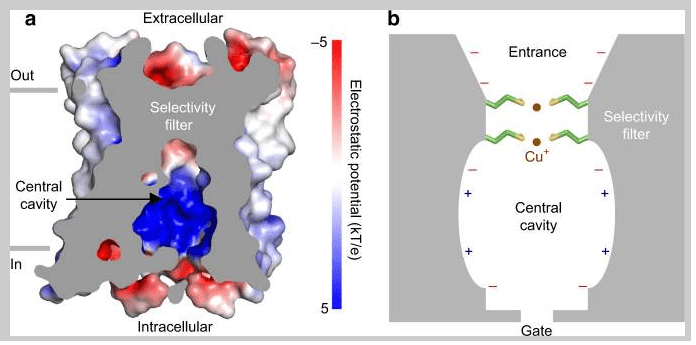
    Figure 3, from Ren (2019). A charge on the interior of Ctr1 b. a cartoon version of the entrance, selectivity, filter, and central cavity.

    We’ve discussed this image on our own Ctr1 post. Personal communications with Ji Miao reiterate our conviction that Cu+ is most natural and least toxic way to absorb copper.

    atox

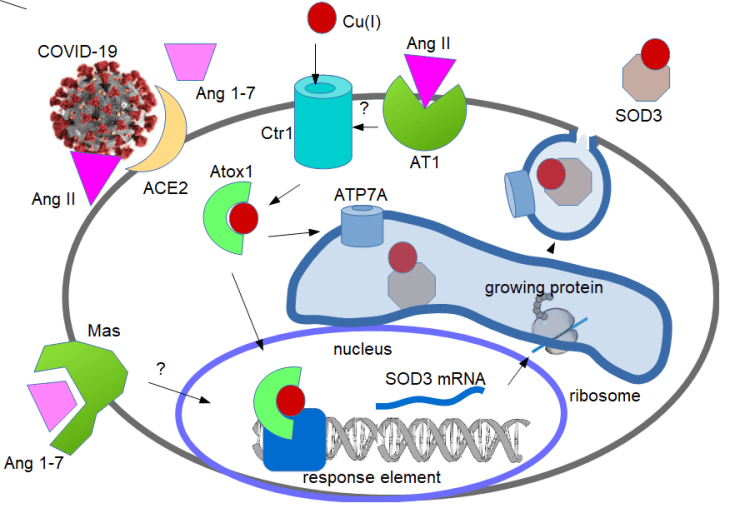
    The Fukai review mentioned the anti oxidant protein 1 (Atox1) being both a chaperone ferry from the Ctr1 to the nucleus as a transcription factor [4] The Liu/Miao review discussed the interplay between Atox1, angiotensin II, and expression of Cu/Zn SOD3. [5] We’ve discussed this in another post on Atox1 in Covid… of course.

    Copper in the +1 oxidation is involved in several levels in producing Cu/Zn SOD3 (1) as acquired by Cu(I) channel Ctr1 (2 ) in chaperone/transcription factor Atox1, (4) in channel ATP7A that loads Cu in Golgi where SOD3 is being processed for secretion.

    Atox1 in Covid post went into more details into the cardiovascular function of angiotensin II in increasing blood pressure and how Cu/Zn SOD3 mitigates this response.

    Other chaperones

    We have covered copper chaperones in another post. The DiNicolantonio review had very little to say about chaperones, but much to say about SOD. [3] Not yet covered on this site is the production of peroxy nitrite when NO reacts with nitric oxide. NO. is needed to relax blood vessels. The Liu/Miao review makes brief mention of SCO1-2, the cytochrome C oxidase assembly protein, and mutations that can cause heart disease [5]. The Fukai review mentioned SCO and went into more detail about CCS, the chaperone for Cu/Zn SOD. [4]

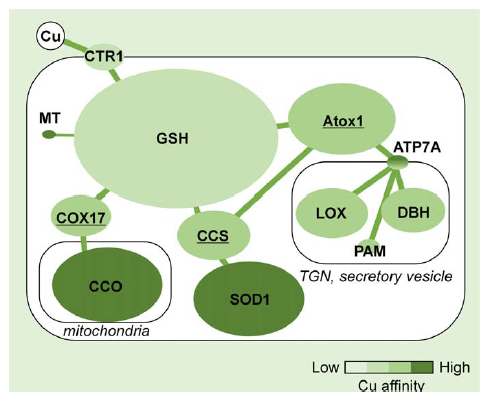
    From Hatori, 2017 [18]

    GSH chaperone of Cu+ was covered in another post. The affinity of GSH complexes for Cu may not be as it was pictured in the Hatorie review covered on the copper chaperones post. We have largely ignored PAM, peptidylglycine alpha-amidating monooxygenase. Dopamine beta hyroxylase (DBH) is also largely off the radar in terms of cardiovascular disease reviews. What are the important copper cofactor enzymes in heart disease?

    Cu/Zn SOD

    All reviews agree that the ability of Cu/Zn superoxide dismutase to scavenge superoxide is important. [3-5] In the bovine study, cardiac Cu/Zn SOD activity decreased from 23.8 ± 7.2 to 16 ± 5.4 U per gram tissue in the Cu adequate versus deficient animals. [6] Thiobarbituric acid reactive substances (TBARS) are formed as a byproduct of lipid peroxidation. These were increased from 76.9 ± 27.2 to 154.3 ± 37.4 moles per gram heart in the Cu adequate versus deficient bovines. [6]

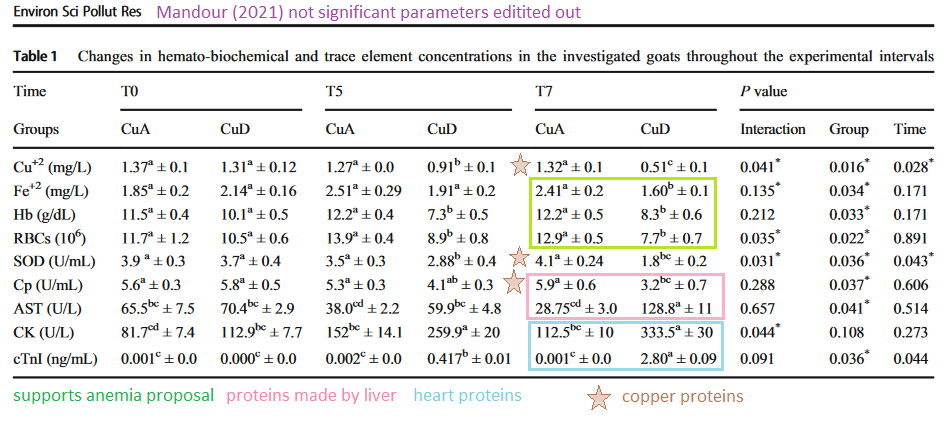
    Table 1 from Mandour 2021 Values are expressed as mean ± SEM (n = 4). Hematological and biochemical parameters in copper adequate (CuA) and copper-deficient (CuD)groups analyzed using two-way ANOVA. The lowercase letters are fitted for comparing means between groups. LSD < 0.05. * P < 0.05 fitted to compare the significance of group, time, and interaction. These are blood values. Cardiac TnI is a blood marker for cardiac injury. Comments are those of CopperOne.

    By the seventh month, the copper deficient goats had a notable decrease in SOD activity and ceruloplasmin ferrioxidase activity. Cardiac troponin I is a heart protein that only appears in the blood when the heart has been damaged. Ceruloplasmin, Cp, is also a carrier for iron. Dr Mondour and coauthors made a argument that the cardiac problems seen in the goats could have resulted from iron deficient anemia. [7] Creatine kinase is found in heart, skeletal muscle, and brain; finding it in the blood is a sign of damage.

    lox, lysyl oxidase

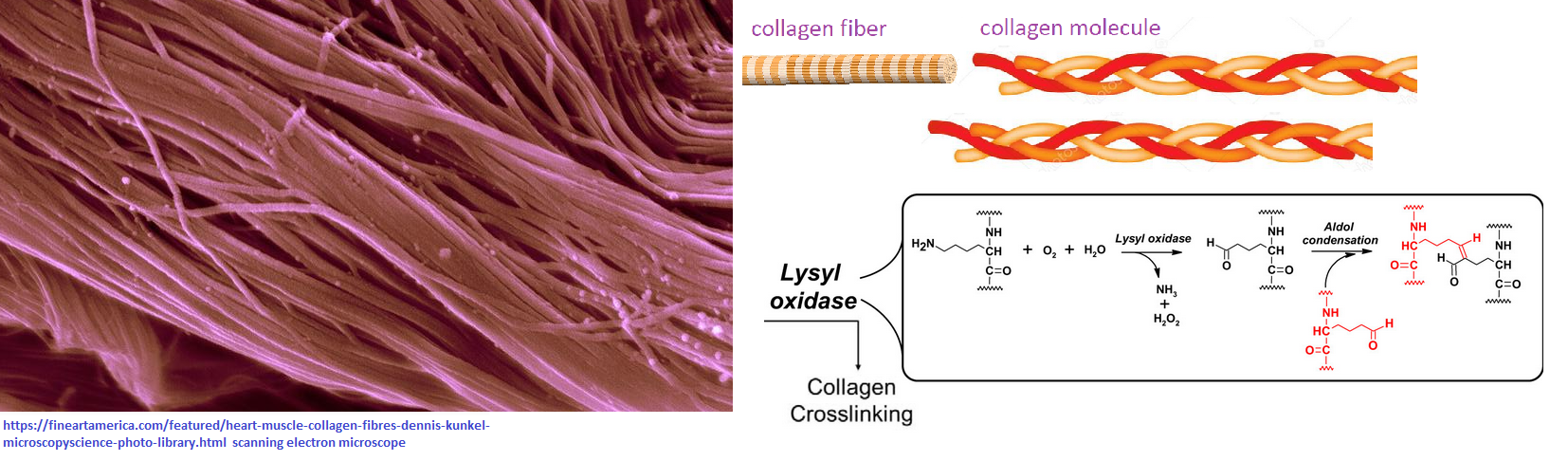
    Lysyl oxidase is a copper cofactor enzyme that cross-links collagen fibrils. DiNicolantonio and coauthors presented a compelling argument that this cross-linking contributes to the mechanical properties of the heart. [3] This group also thinks that advanced glycation endproducts are a problem in Cu deficiency. [3] The Fukai group discussed lox from the standpoint of vascular wound and the consequences of lacking the caperone Atox1 and the transporter ATP7A. [4] Liu and Miao also focused on collagen cross linking and mechanical properties of the heart. [5]

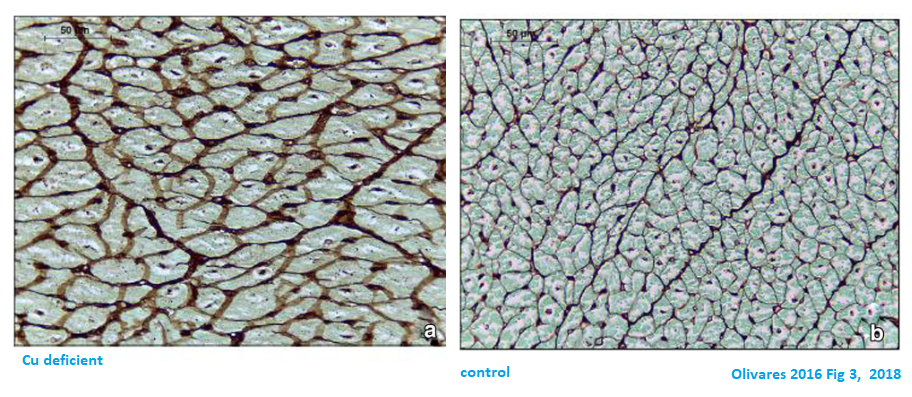
    Fig. 2 Olivaras Area occupied with connective tissue. IS, interventricular septum;LV, left ventricle; RV, right ventricle; WM, whole myocardium.
    *Statistically different (P < 0.05) with respect to control Images have been added to show the chemistry of collagen cross linking and formation of advanced glycation end products.

    The GMS stain reacts with carbohydrates. If lysyl oxidase is under active, the aldehyde form of glucose could react with the side chains of lysine that have not undergone the oxidation to the allyl lysine form (above).

    Fig. 3 Histopathological image of left ventricle myocardium stained withGMS, × 400. Deficient animals showed a severe thickening of myocytes
    basement membranes (a) with respect to control group (b)

    cytochrome C oxidase..ATP to power the heart beat

    Or not. Copper deficiency may be linked decreased Cox activity and ultimately cardiac hypertrophy. [3,5] Cardiac Cox was not significantly different between the adequate and deficient bovines. [6]

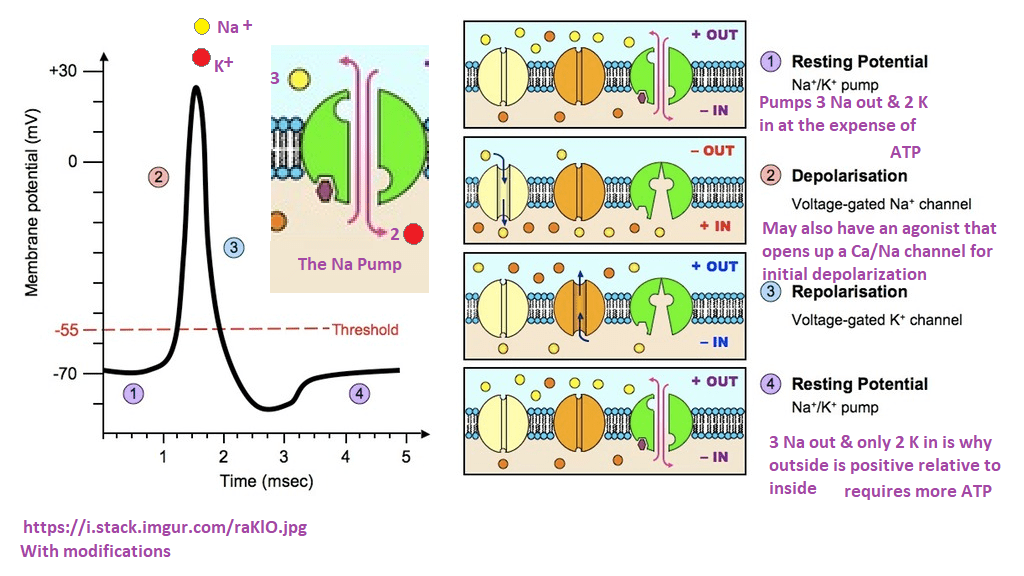
    ATP and the action potential

    Cytochrome C oxidase is a component of the mitochondria that makes ATP. ATP is an absolute requirement for the action potential That signals a post synaptic neuron to

    Steps of the actin potential that apply to post synaptic neurons and to muscle.

    Action potentials, in neurons and muscles require the ATP fueled Na Pump to return to the resting membrane potential. Muscle contraction requires to other ATP intensive processes. The action potential in muscle travels to the DHP Ca2+ channel that signals the Ryanodine (& caffeine) receptor to release even more Ca2+ from the sarcoplasmic reticulum. Ca2+ binds to TnC of the troponin complex that moves tropomyosin aside so that myosin heads may move about on actin. This of course requires ATP! Getting Ca2+ back into the SR requires ATP!

    The makers of CopperOne have a tendency to want to make everything about ATP and the mitochondria. Let us continue this journey that leads to Cu/Zn SOD and lysyl oxidase.

    Mandour et al ECG and echo data

    This is an extremely nice study by a group of physiologists.

    ECG data

    Electrocardiogram (ECG) is a recording of the heart’s electrical activity during the cardiac cycle. The ECG is a graph of electrical potential difference detected by electrodes placed on strategic places on the skin … as a function of time.

    Fig. 1 Mandour (2021) Illustrative electrocardiography obtained from the base-apex lead in Shiba goats. Normal sinus rhythm of goats showing rS (a) and qRs (b)patterns. Paper speed 50 ms;voltage 20 mv

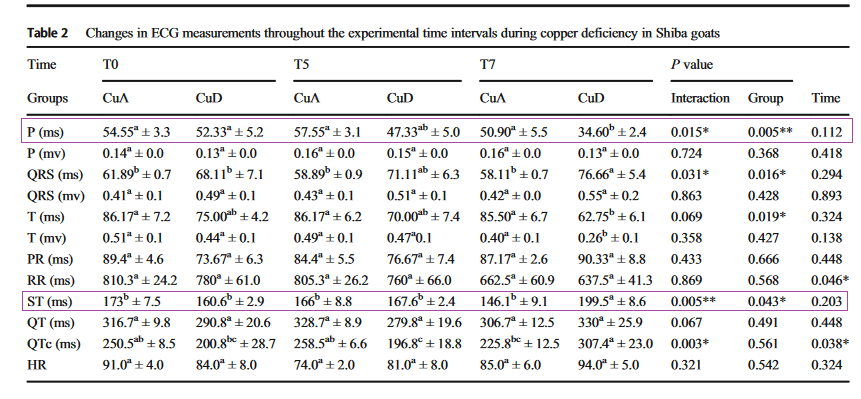
    Only specific intervals of the cardiac cycle were prolonged in the Cu deficient goats.

    Mandour 2013 “Note: Values are expressed as mean ± SEM (n = 4). ECG obtained from base apex lead at three interval times presented as two-way ANOVA. Thelowercase letters are fitted for comparing means between groups. LSD <0.05. * P < 0.05 fitted to compare the significance of group, time, and interaction ms millisecond, mv milli volt, QTc corrected QT, HR heart rate”

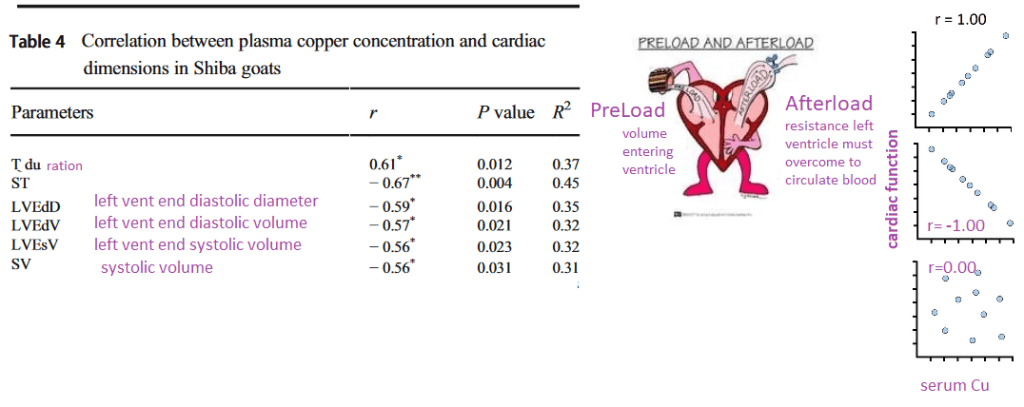
    In the ECG data the P wave duration and the time between the QRS and T wave were the most influence by copper. Note that there was no change in heart rate as a result of copper deficiency. Changes in the ST segment are usually associated with ischemia. Indeed, a significant negative correlation was observed for the ST interval as a function of serum copper, see table 4 edited for only significant values. Graphs on the right hand side illustrate hypothetical correlations. The more copper, the longer the T segment duration.

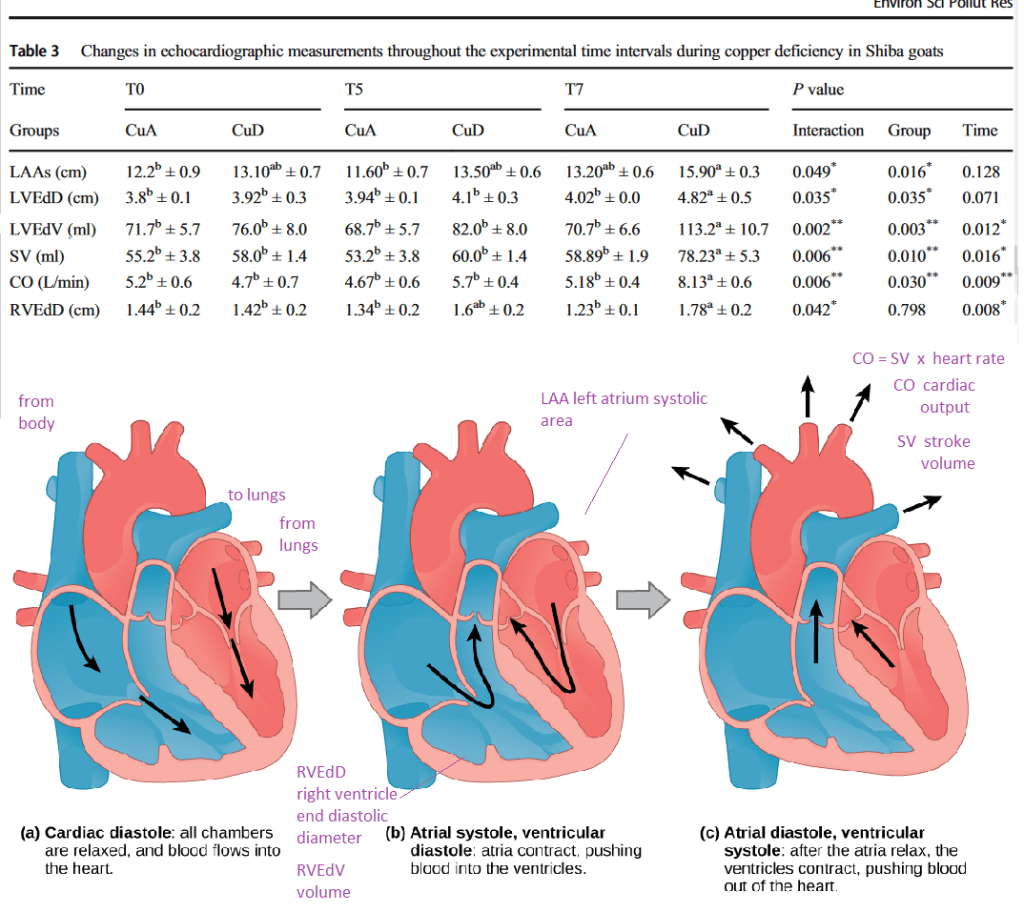
    Echo cardio data

    Table 3 from Mandour 2021 has been edited to show only the significant results. Some images of the cardiac cycle have been added for the non cardiologists. The cardiac output and stroke volumes have increased, the end volumes and diameters have also increased. It’s as if blood is moving through

    Correlating heat data with serum copper content…

    A highly edited version of Table 4 from Mandour 2021. Cartoons explaining preload and after load and correlation coefficient have been added for clarity.

    Dr Mandour and colleagues attributed the prolongation of the ECG parameters in the
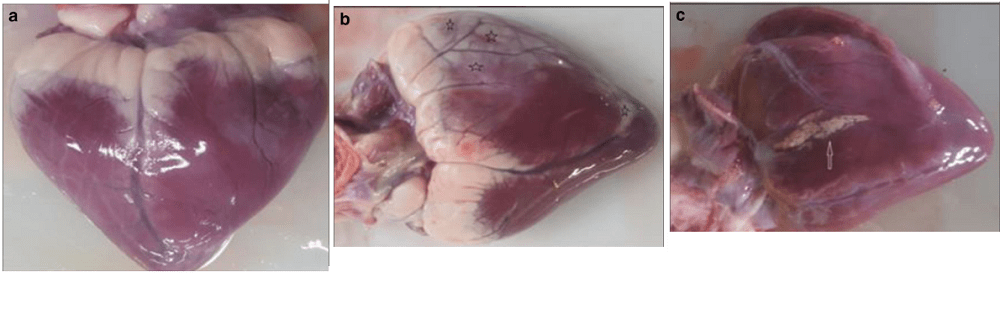
    Cu deficient group at five and seven months to ventricular enlargement via hypertrophy or dilation. [7] They proposed that the reduced ECG T-wave duration may be due to cardiac damage as based up by increases in systolic volume, cardiac output, left atrium area, and so on in Table 3. Increased preload and cardiac dilatation were cited as possible explanations. [7] The preload is the extent of which the sarcomers are stretched before the heart contracts. Mandour and coauthors favored cardiac remodeling in response to anemia as the explanation. [7] Anemia results in decreased systemic peripheral resistance and thus a decreased afterload. Interestingly. anemia may arise from decreased plasma and cardiac Fe2+ secondary to the decrease in Cu. [7] In spite of these alterations, the copper deficient goats did not develop severe cardiomyopathy or heart failure. these are some images of goat hearts in the Mandour 2021 study. [7]

    Mandour 2021 Fig. 3 Necropsy examination of the heart at the end of the experimental CuD in goats. a Normal appearance of the heart from the CuA (control) group showing no gross lesion. b Goat’s heart from CuD group showed a widespread of paleness, grayish streaks of myocardial degeneration, and necrosis (black stars). c Focal necrotic lesion on the external surface of the heart (white arrow)

    Conclusions…

    We’ve known from early studies of Leslie Klevay that Cu deficiency is associated with heart disease. [1,2] What we have posted about copper in regards to Covid-19 is more or less consistent with what experts in the heart have written about Cu deficiency and heart disease. [3-5] Olivares and coauthors found increased extracellular matrix and decreased serum and hepatic Cu in Cu deficient bovines. [6] Much of the Olivares report focused on mitochondrial defects. [6] Mandour and coauthors conducted and extensive cardiology study on Cu deficient goats. A concluding suggestion that secondary iron deficiency anemia might be cause of decreased after load and accompanying cardiac changes. [7] We could just as easily argue that a decrease in Cu/Zn SOD could allow super oxide to react with the blood vessel relaxing small molecule nitric oxide. We could also argue that changes in lysyl oxidase cross linking of collagen in blood vessels is important. The cartoon of Hatori and coauthors says it all. CCO might get first dibs when Cu is deficient. Lysyl oxidase being further down in the Cu “lunch line” may create long term problems.

    Thoughts which copper enzymes are important in copper deficiency after reading the literature. The ones that are most important for short term survival may get Cu+ first based on affinity [8] but they may all be important in long term heart health.

    This is the CopperOne summary_cartoon. Thank you for reading.

    References

    1. Klevay LM. (1973) Hypercholesterolemia in rats produced by an increase in the ratio of zinc to copper ingested. Am J Clin Nutr. 1973 Oct;26(10):1060-8.
    2. Klevay LM, Viestenz KE. Abnormal electrocardiograms in rats deficient in copper. Am J Physiol. 1981 Feb;240(2):H185-9. doi: 10.1152/ajpheart.1981.240.2.H185. PMID: 7468813.
    3. DiNicolantonio JJ, Mangan D, O’Keefe JH. Copper deficiency may be a leading cause of ischaemic heart disease. Open Heart. 2018 Oct 8;5(2):e000784. PMC free article
    4. Fukai, T., Ushio-Fukai, M., & Kaplan, J. H. (2018). Copper transporters and copper chaperones: roles in cardiovascular physiology and disease. American journal of physiology. Cell physiology, 315(2), C186–C201. PMC free article
    5. Liu, Y., & Miao, J. (2022). An Emerging Role of Defective Copper Metabolism in Heart Disease. Nutrients, 14(3), 700. PMC free article
    6. Olivares RWI, Postma GC, Schapira A, Iglesias DE, Valdez LB, Breininger E, Gazzaneo PD, Minatel L. (2019) Biochemical and Morphological Alterations in Hearts of Copper-Deficient Bovines. Biol Trace Elem Res. 2019 Jun;189(2):447-455. free article
    7. Mandour AS, Elsayed RF, Ali AO, Mahmoud AE, Samir H, Dessouki AA, Matsuura K, Watanabe I, Sasaki K, Al-Rejaie S, Yoshida T, Shimada K, Tanaka R, Watanabe G. The utility of electrocardiography and echocardiography in copper deficiency-induced cardiac damage in goats. Environ Sci Pollut Res Int. 2021 Feb;28(7):7815-7827. free article
    8. Hatori Y, Inouye S, Akagi R. Thiol-based copper handling by the copper chaperone Atox1. IUBMB Life. 2017 Apr;69(4):246-254. free article
  • Sp1 and copper

    Sp1 and copper

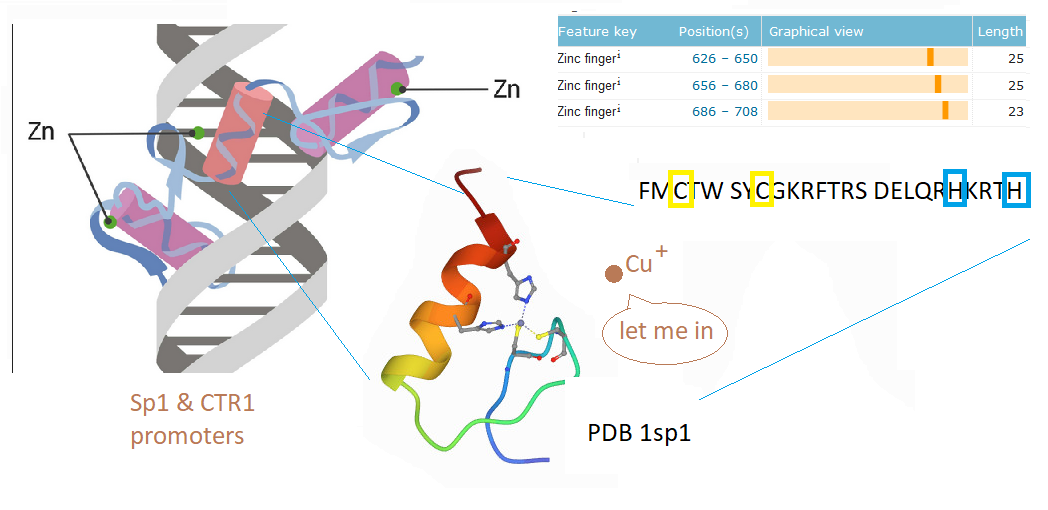
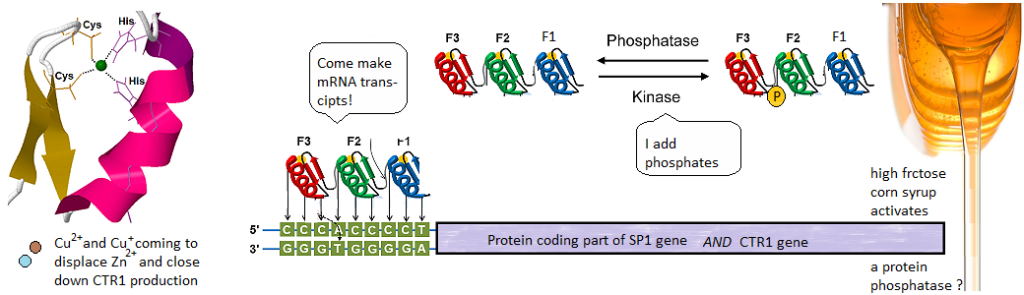
    This post investigates a claim in a review by Morrel and coworkers that excessive dietary fructose can decrease the expression of Ctr1 in the duodenum. [1] How could this happen? What is transcription factor for Ctr1? As it turns out, both Cu+ and Cu2+ can bind to the CTR1 transcription factor Sp1 and negatively regulate its activity [2,3] The featured image describes out Cu can disrupt the Zn2+ finger(s?) Sp1 uses to bind to the promoters of itself and CTR1. If you wish to skip the details of some brilliant experiments, click to go to the lay friendly summary.

    Cu2+ prevents Sp1 promoter binding

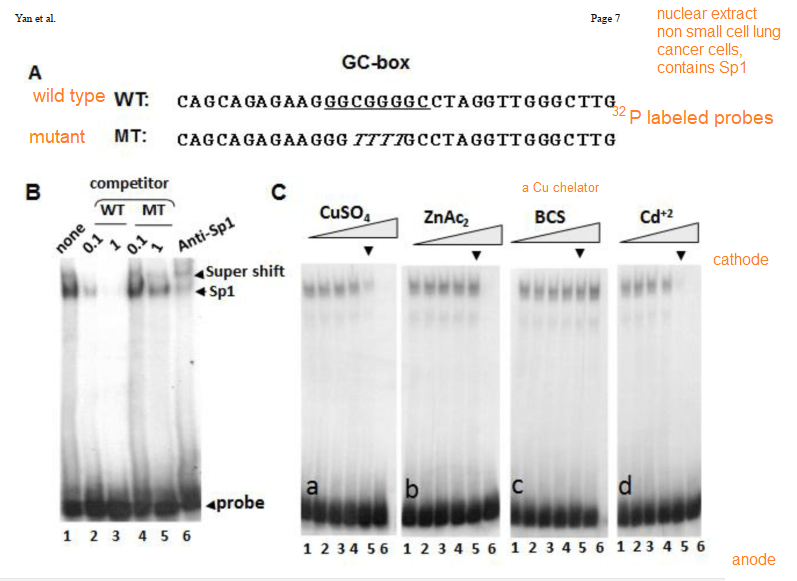
    In their introduction to their Cu2+ study Yan and coworkers discussed the role of cysteines and histidines in binding Zn2+ and other transition metals like cadmium and copper.  When metal ions are not bound to the zinc fingers of Sp1, Sp1 binds to the GC-rich boxes with the consensus sequence 5’-G/T-GGGCGG-G/A.  This GC box lies upstream of the gene for Sp1 itself, CTR1, and many other genes.  In the absence of copper, Sp1, the protein transcription factor, increases transcripts for more Sp1 and Ctr1 until copper balance is restored.   Figure 1 of this study used a nuclear extract of non small cell lung cancer cells that contained several isoforms of the SP1 protein.  This extract was mixed with 32P labeled double stranded DNA probes that have a negative charge.  The mixture was added to an agarose gel. An electrical current was applied such that the negatively charged small pieces of probe DNA migrated to the anode.   When bound to Sp1, they migrated slower.  Concentration ramps of  t 0, 1, 10, 50, 100, and 200 µM divalent metal ions were added to test the hypothesis that less probe would be present in the upper band that contains Sp1.  A Western blot was performed on the material in 1B to demonstrate that the upper band contains Sp1. 

    The first lane of 1B is just the 32P labeled probe.  The second two lanes are two increasing concentrations of the wildtype probe that is not 32P labeled.  The two MT mutant probes are also not radioactive.  These results demonstrate the specificity of the assay. [2]

    Cu+ prevents Sp1 promoter binding

    Technically speaking, there should be no free copper inside the cell.  It should be bound to some chaperone.  Cu should be in the Cu+ oxidation state. This is what is ground breaking in the Yuan 2017 study. Sp1, even when its Zn2+ fingers are metallated and ready to bind to CTR1 promoter, the chaperone Atox1 can donate a Cu+ and turn it off.  

    1 Cu+ binds to all three Zn fingers

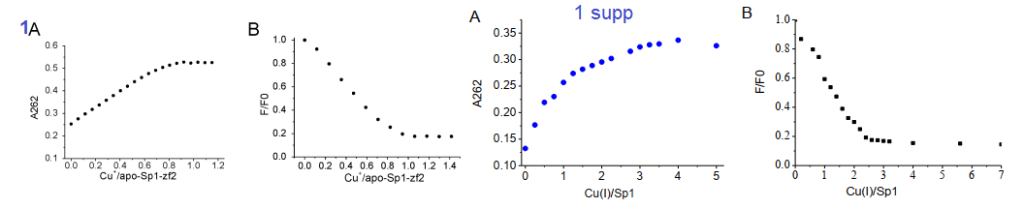
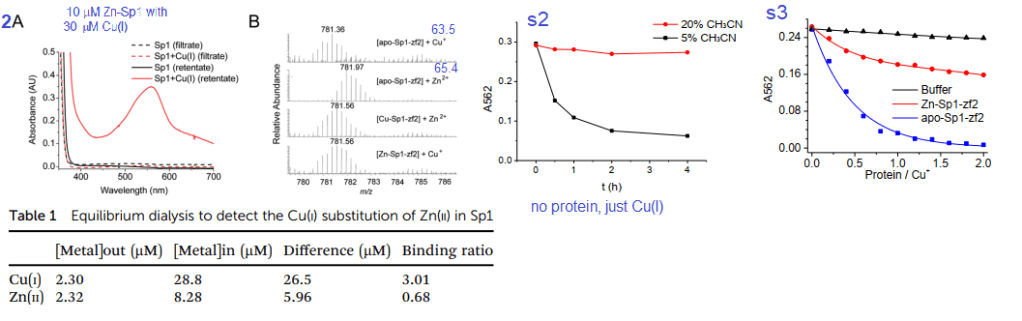
    Yuan and coworkers kept Cu in the +1 oxidation state by use of the reducing agent TCEP.  The absorbance at 262 nm was taken as an indication of S- Cu+ charge haring transition. [3]  This particular experiment only used the second Zn2+ finger.  The second Zn2+ finger contains two tryptophans W560 and W571.  Tryptophan fluoresce at 340 nm when excited at 280 nm.  Fluorescence may be quenched when these aromatic residues are exposed to an aqueous environment, or as the authors speculated, by interactions of the thiolate anion with Cu+.  The authors also stated that the apo 2nd Zn2+ finger tends to be unfolded.  The amino acid sequence of the 2nd Zn finger is shown in the featured image note that there’s a tryptophan (W) flanked by two cysteines ( C yellow box).

    1A the second zinc finger from Sp1. !supp, the full length Sp1

    Note that Cu binding data for just the 2nd Zn finger saturate at 1:1 Cu per Sp1. For the full length Sp1, the binding saturates at a 3:1 ratio. This suggests that all three Zn fingers bind Cu.

    2. Cu(I) can react with Zn-bound Sp1

     Figures 2A, s2 and s3 used a Cu+ chelating agent called bicinchoninic acid (BCA).  BCA has a strong absorbance maximum at 582nm when it binds to Cu+.  Panel 2A is not (just)  the absorbance spectrum of Sp1 with Cu+.  BCA was added to the material retained on an ultrafiltration membrane with a 3 kDa cutoff size.  Anything smaller is passed through the filter and larger is retained in a small amount of solution on the top of the filter.  As a negative control, the filtrate and retentate of Sp1 that had never seen Cu did not react with BCA to give the magenta color.  Table 1 shows the results.  Almost all of the 30 μM Cu+ is picked up by 10 μM Sp1.  About 2.μ.  There was 2.32 μM Zn2+ displaced from 10 M Sp1.  8.28 Zn2+ remained “in” the dialysis tube with the Sp1.  These data estimate the Zn2+ – Sp1 binding ratio to be 0.68 and 3.01 for Cu+ to Sp1. 

    Panel 2B used a technique called mass spectrometry to measure the mass/charge ratio of the Sp1 2nd Zn finger.  There is a semi clear reduction in mass when Cu+ displaces Zn2+  These two atoms are very close in mass.  To make matters more interesting histidines and cysteines have side chains that may be protonated, or not depending on the pH of the solution and whether they are binding transition metals.  Supplemental figure 2 shows use of 5 and 30% acetonitrile as a means of slowing down oxidation of Cu-BCA.  Supplemental figure 3 shows just the 2nd Zn finger of Sp1 stealing Cu from CuBCA in the presence of 10% v/v acetonitrile.  In just buffer, the absorbance stays fairly constant.  As Zn-Sp1-zf2 is added, The absorbance of Cu-BCA decreases about one third of the original.  When there is no Zn, the decrease in Cu-BCA absorbance is essentially complete when there is twice as much 2nd Zn finger as BCA bound Cu.  Just a note, UV /visible light absorption is often used to measure metal ions interacting with proteins.  These contributions are probably not that great in this particular system.

    3. NMR experiments

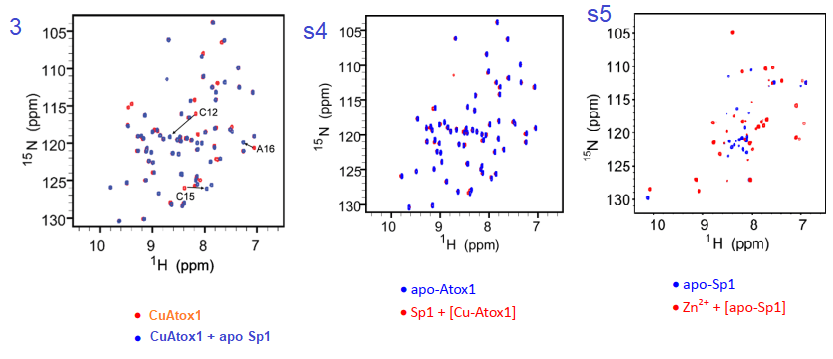
    The authors did not disclose details of how they labeled the expressed protein with 15N instead of the more abundant 14N isotope.  It is assumed that they supplemented the bacterial expression system with 15N ammonium chloride or something. The NMR technique has heteronuclear single quantum coherence (HSQC) that basically measures 1H-15N pairs within the amino acids of the protein. Each dot on the graph represents a bonded H and N in only the 15N labeled protein.

    Figure 3 and complementary supplemental dtaa from Yuan (2017) [3]

    Yuan and coworkers reported that the association constant  of Cu for KCu-Atox1 = 2.51x  1017protein.  Adding Apo Sp1 changes a number of N-H pairs.  Figure s4, going in the reverse direction changes little.  We are assuming that Cu-Atox1 is the 15N-labeled protein.  Figure s5 is somewhat of a control showing some massive, global changes when Zn2+ binds apo Sp1.  Note that these changes seem to be larger than when Cu+ binds apo Sp1.

    4. Circular Dichroism, a window into protein secondary structure

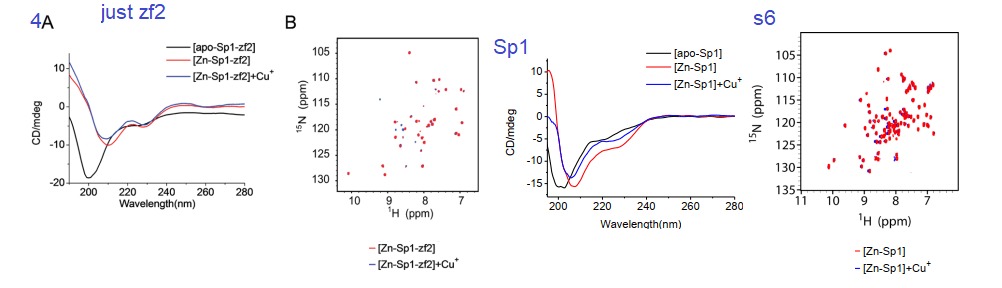
    Circular dichroism is a method involving the absorbance of circularly polarized light by structures within a protein.  It is used to measure the proportions of α-helices, β-sheets, and random structures.  The yellow to red helix in the featured image is considered an α-helix. Binding of a metal ion may be anticipated to make a protein more ordered. 

    Fig 4 and supplemental from Yuan 2017

    Yuan and coauthors considered that the addition of Cu+ and Zn2+ both resulted in a more ordered zf2.    The 2D HSQC NMR data in 4A and s6 also indicated not that much change between the two metal ions and the existence of a Cu finger.  Figure s6 is a mirror experiment using the entire Sp1 protein.  Zn-Sp1 + Cu+ seems to be somewhere in between the disordered apo Sp1 and Zn-Sp1 structures.  Cu+ disruption of GC box binding is what really matters in this story. 

    5 Cu+ inhibits Sp1 from binding to GC boxes

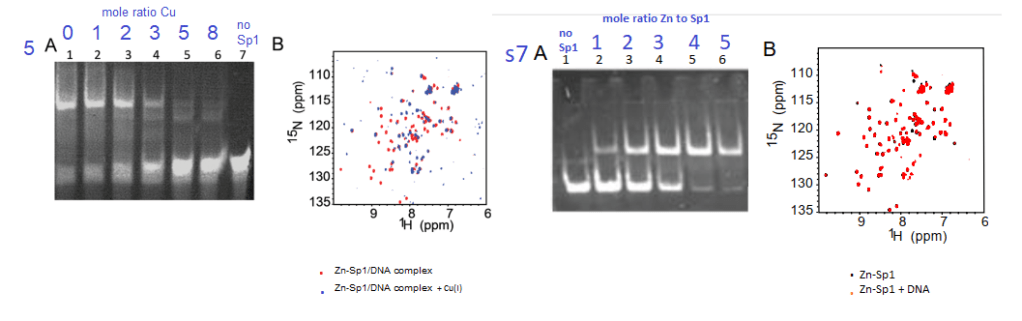
    Yuan and coworkers also used the gel mobility shift assay to demonstrate tha at about 3:1 moles Cu+ to 1 mole Sp1, the probe of the GC rich binding site on the CTR1 promoter ceases to bind Sp1 (top band, panel 5A. Panel s7A shows the opposite is true for Zn2+. These authors used a lot of NMR data

    Figure5 and supplemental figure 7 from Yuan (2017)

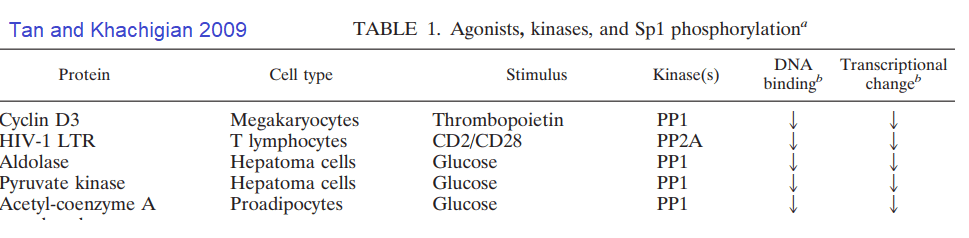
    What about post translational changes in Sp1 other than metal binding?  Tan and Khachigian wrote an insightful review in this regard.[4] 

    A highly edited Table 1 from Tan and Khachigan 2009. The many phosphorylation events that lead to activation of Sp1 have been removed.

    Some further investigation of the cited references revealed hexose kinase was also down regulated by glucose deprivation. [5] The PP1 inhibitor okadaic acid decreased the increased transcription of aldolase and pyruvate kinase in response to glucose. [5]  These authors saw what they interpreted as minor proteolysis of the dephosphorylated Sp1 in their Western blots. [5] 

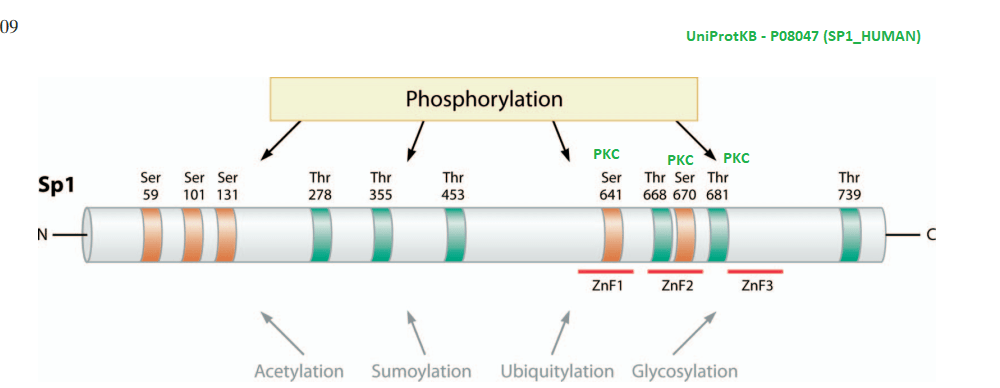
    Note that two protein kinase C phosphorylation sites flank Zn finger #2. Protein kinase C is activated by Ca2+.

    Concluding remarks

    We are little closer to understanding how fructose can lead to copper deficiency than we first began. Over dosing on Cu is still possible. It would seem that nature has given us a way to turn off import when we have enough. Sp1 even “knows” when our Cu chaperones are copper replete. [3] We are only scratching the surface of possible Sp1 post transnational modifications that might impact Sp1 binding to the CTR1 promoter. It is becoming apparent that the cure for copper deficiency may not be as simple as eating more copper.

    • S-glutathionylation is a postranslational modification that occurs during oxidative stress whereby glutathion forms S-S bonds with protein thiols. Recall that the SH group of Zin finger cysteines. Glutathionylation may be reversed with NADH dependent enzymes thioredoxin and glutaredoxin.
    • Advanced glycation end products. AGE are formed when -NH2 on side chains of amino acids such as lysine react with the aldehyde groups of sugars, fructose more than glucose. Note that there are a few lysines (K) in the sequence of the 2nd Zn Finger of Sp1.
    • N-acetylation of lysines may occur on K2 and K703 of human Sp1 according to UniProt.org. K703 is within the 3rd Zn finger. We at CopperOne think that a copper replete, functioning mitochondria is needed for generation of NAD+ which regulates the deacetylation enzyme Sirt1.

    Lay_Summary

    Sp1 binds upstream of the protein coding parts of its own gene and the gene for the Ctr1 transporter. It contains three Zinc fingers. Cu+ and Cu2+ can displace the Zn and stop Sp1 from making more Sp1 and Ctr1. Sp1 can have phosphates attached to it by enzymes called kinases. Phosphatases take phosphates off. Phosphates some how or another may increase transcription of down stream genes. Speculation is that fructose may activate a phosphatase.. We’ve still no clue as to how fructose causes copper deficiency… just some educated hypotheses.

    For CopperOne critics who don’t like us using Dr Brewer as a reference, we are remaining fast in our conviction that Cu2+ is bad. A new colleague shares this conviction. If Cu2+ is absorbed via the divalent metal ion transporter, the right way to absorb proper Cu+ gets shut down.

    References

    1. Morrell, A., Tallino, S., Yu, L., & Burkhead, J. L. (2017). The role of insufficient copper in lipid synthesis and fatty-liver disease. IUBMB life, 69(4), 263–270. PMC free article
    2. Yuan S, Chen S, Xi Z, Liu Y. Copper-finger protein of Sp1: the molecular basis of copper sensing. Metallomics. 2017 Aug 16;9(8):1169-1175. PMC free article
    3. Yan, D., Aiba, I., Chen, H. H., & Kuo, M. T. (2016). Effects of Cu(II) and cisplatin on the stability of Specific protein 1 (Sp1)-DNA binding: Insights into the regulation of copper homeostasis and platinum drug transport. Journal of inorganic biochemistry, 161, 37–39. PMC free article
    4. Tan, N. Y., & Khachigian, L. M. (2009). Sp1 phosphorylation and its regulation of gene transcription. Molecular and cellular biology, 29(10), 2483–2488. PMC free article
    5. Schäfer D, Hamm-Künzelmann B, Brand K. (1997) Glucose regulates the promoter activity of aldolase A and pyruvate kinase M2 via dephosphorylation of Sp1. FEBS Lett. 1997 Nov 17;417(3):325-8. free article
  • POTS and copper

    POTS and copper

    Carrie Burdinski MS, an anatomy and physiology professor at Delta College, has an excellent 2 hour Youtube video on everything you need to know to understand the role of the autonomic nervous system in postural orthostatic tachycardia syndrome (POTS). Ms Burdinski does an excellent job of describing the physiology of non tachycardia symptoms of POTS like “brain fog” and loss of temperature control, both symptoms of Long Covid.
    Ms Burdinski gave an interesting overview of different ways that genetics and epigenetics influence the regulation of the norepinephrine (noradrenaline) transporter that clears “used” noradrenaline from the the synaptic cleft. A quick title search of PubMed reveals the following

    1. Mutations in the NET gene that result in a single amino acid substitution in the translated protein that affect the efficiency of noradrenaline / norepinephrine uptake.
    2. Epigenetic methylation of the promoter of the NET gene that prevents translation of the gene into messenger RNA (mRNA)
    3. Epigenetic micro RNA binding to the NET mRNA that prevents it from being translated into a protein.

    Once the NET mRNA is translated into a protein, there are numerous “post translational” modifications that can regulate protein function. (Mandela and Ordway 2006)

    Examples of regulating NET

    These examples from the Mandela and Ordway review are pretty typical of protein regulation. We need to remember that the adrenergic receptors are also subject to regulation at the protein level.

    1. Phosphates may be added to amino acids serine, threonine, and tyrosine by protein kinase C, casein kinase II, Ca2+ calmodulin kinase, and cAMP dependent protein kinase. The latter is particularly interesting because many heterotrimeric G proteins, of which the adrenergic receptors are a few of many, signal through an enzyme that makes cAMP.
    2. A large number of neurotransmitters that bind to heterotrimeric G protein receptors
    3. Protein phosphatases remove phosphates from serine, threonine, and tyrosine.
    4. Insulin is known to decrease NET mRNA expression in locus coeruleus neurons of the rat
    5. Atrial natriuretic factor (ANF) increases production of NET
    6. Nerve growth factor decreases NET mRNA levels.
    7. Nitric oxide may regulate NET by thiol nitrosation and/or cGMP dependent protein kinase.

    We will not get into the dozens, if not hundreds, of pharmaceuticals that can regulate norepinephrine/noradrenaline release, reuptake, and binding to its many receptors. Ms Burdinsky was obviously frustrated with the myriad of pharmaceuticals not only to regulate these proteins up to mitigate the side effects.

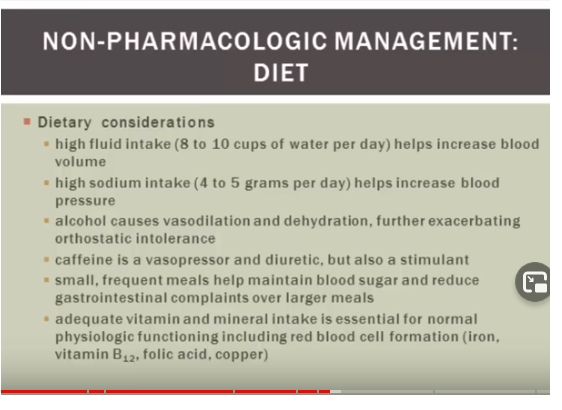
    A screen shot of Ms Burdinski’s youtube lecture. This shot covers non pharmaceutical interventions for POTS.

    Ms Burdinski went over the physiology behind each and every bullet point on this screen shot and why she thought these dietary interventions help POTS patients. The reasons behind copper were

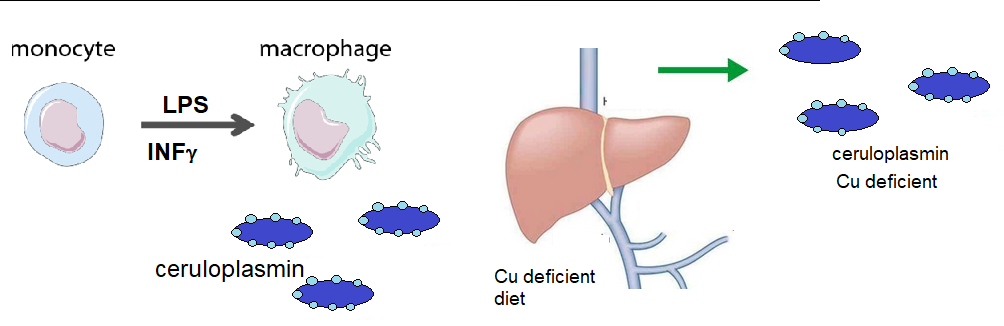
    1. Copper is needed for proper handling that we have covered in the ceruloplasmin post.
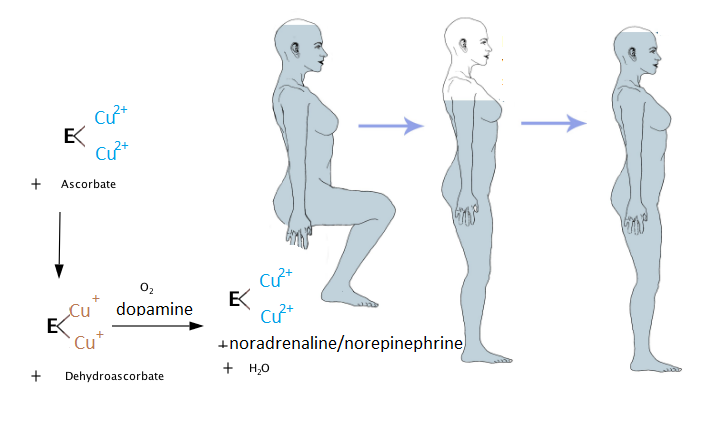
    2. Ms Burdinski postulated that if the presynaptic neuron is that recycling used noradrenaline because of impaired reuptake by NET, it needs more copper for dopamine hydrolase, the enzyme that synthesizes noradrenaline from dopamine. If noradrenaline is not recycled, it just diffuses away from the synaptic cleft. Therefore the neuron needs to make more

    Copper deficiency and autonomic dysfunction

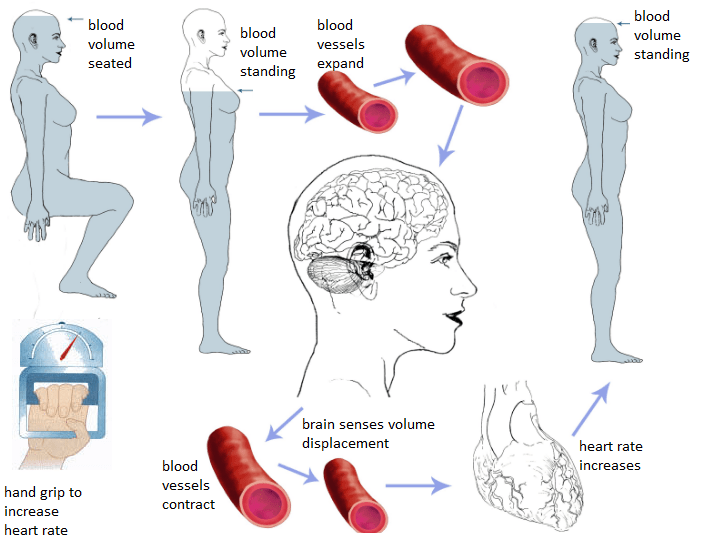
    This 1988 study came from the United States Department of Agriculture, Agriculture Human Nutrition Research Center in  Grand Forks, North Dakota.  Lukaski and coworkers explored this link in female volunteers.   This study seemed to start as a simple baroreceptor reflex investigation.  When we are at rest, our brains get adequate blood flow.  Upon standing gravity decreases the blood volume in our brains. This causes our blood vessels to contract.

    When peripheral blood vessels do not properly contract when the woman stands, the brain continues to sense a volume displacement and the heart rate continues to increase. A hand grip exercise was used to increase the heart rate and divert just a small amount of the blood of the women to the exercising muscle.
    The diets

    Eight women, 18-36 years old, were monitored on four separate diets for a total of 135 days

    • basal, low diet copper 0.65 mg d -1 and adequate in ascorbic acid (90 mg d-l) 42 days
    • basal low copper + 1.5 g acid d -1 ascorbic acid for 42 days
    • basal + 0.8 mg d -1 copper, control normal copper, 14 days
    • basal +2 mg d 1 copper for 37 days, repletion.
    Copper retention or chemical balance
    • Retention was calculated as the difference between intake and excretion in urine and feces. Menstrual and sweat loses were not considered.
    • At the end of each dietary period, fasting venous blood samples were obtained to determine biochemical indices of copper status.
    • Total plasma copper was determined by atomic absorption spectroscopy .
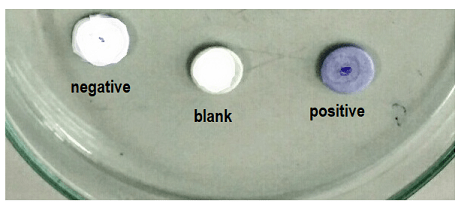
    • Ceruloplasmin enzymatic activity was assayed as a colorimetric p-phenylenediamine oxidase assay.
    • Ceruloplasmin content was measured by the radial immuno diffusion assay.
    An image of the p-phenylenediamine oxidase assay.
    An image of the radial immuno diffusion assay. The bigger the circle the greater the activity.
    Baroreceptor response
    • Autonomic cardiovascular function was assessed at the end of each dietary period.
    • Volunteers were tested in the post absorptive state after a 30-minute rest during which they were supine on a bed in a quiet room.
    • Variation in resting supine heart rate was determine over a three-minute period using the mean square successive differences of R-R intervals .
    • Orthostatic responses, upon arising form supine position and standing, were measured for heart rate and blood pressure.
    • Heart rate response was defined as the ratio of the R-R interval of the 30th to the 15th beat after standing.
    • Blood pressure was measured as each volunteer was supine and resting quietly and after one minute upon standing.
    The hand grip exercise
    • Standing heart rate and blood pressure responses were determined before and during five minutes of sustained hand grip exercise with the dominant arm at 30% maximal voluntary contraction using a calibrated handgrip dynamometer.
    • Maximal voluntary contraction was determined at the end of each diet period.
    • Heart rate was recorded continuously using a multichannel electrocardiograph and standard limb leads.
    • Blood pressure was determined by auscultation on the inactive arm with diastolic pressure defined as the fourth phase Korotkov sound.

    Results

    Most copper is excreted in the feces
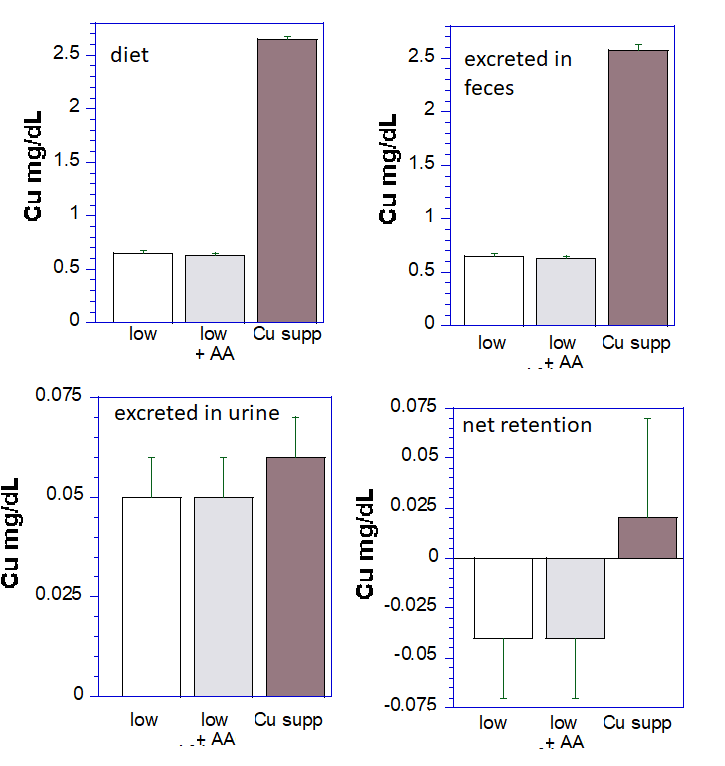
    These data are a graphical representation of Lukaski (1988) table 1. The data from the normal copper arm of the study were not collected, or presented in table 1.

    Note that the copper supplemented diet has almost 5x the copper as the low copper diet. A remarkable observation in this study is that whether the copper is low or high, most of it is excreted in the feces. Virtually the same amount of copper is excreted in the urine. Retention of copper is higher in the copper supplemented arm of this study. Ascorbic acid (AA) had no influence on copper retention. What is not clear is if the large excretion of copper is due to failure to absorb it in the first place.

    Dietary increases in copper and ceruloplasmin

    The following graphs were reproduced from table 2 to emphasize the similarities and differences. Treatments different from the normal copper control at p<0.05 are indicated by “*”. Variations of copper in these short term diets had no influence on plasma copper. All eight women spent some time in each group.

    Data frp, table 2 of the Lukaski publication were graphed to emphasize the changes, and lack thereof

    Concentrations of ceruloplasmin, as measured by radial immune diffusion, are in units of mg per liter of plasma. We can only assume that the authors used standards to calibrate the diffusion values. A ceruloplasmin reference range is 200-350 mg per liter. The low copper diet, with or without ascorbic acid (AA) decreased ceruloplasmin activity without decreasing the amount of protein. In fact, AA slightly increased the amount of ceruloplasmin protein in the plasma.

    Ceruloplasmin enzymatic activity, in units of mg per liter, dropped (p<0.05) when the participants were on low copper diets with or without ascorbic acid (AA) supplementation. Copper supplementation to 2.65 mg per day did not increase the enzyme activity above what was observed when the participants over on 1.45 mg copper per day (Cu).

    POTS spoiler, slight detour

    The spoiler alert, the authors reported no differences in the blood pressure responses from going to a supine position to standing. At the time of the study, the scientific community was becoming aware of the cardiovascular response to exercise. A short publication by Qumar and Read (1987) documented a decrease of blood flow to the mesenteric circulation to the small intestine in response to exercise. Many readers were told as children, “Don’t swim right after you eat lunch or you will get a stomach ache!”

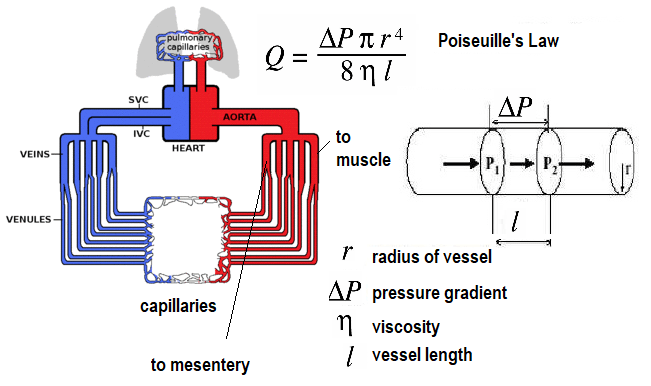
    If we are running from a dangerous situation, we’d want the blood flow (Q) to our gastrointestinal to decrease somewhat to allow more flow to our legs. When a vessel relaxes, the radius (r) becomes larger and flow increases. When the pressure gradient increases, flow increases. If all vessels were to simultaneously relax, blood flow have to drastically increase to keep the tissues oxygenated. Restricting the flow through some and increasing the flow through those arteries that supply muscles that are exercising means the cardiac output (flow) only has to increase a little bit.

    Physical determinants of blood flow, Q. Note that small decreases in the radius of a blood vessel can result in very large decreases in flow. Lines point “to muscle” and “to mesentery.” Imagine another line that points “to brain” for the sake of POTS.

    The mean arterial pressure (MAP)

    MAP may be estimated as the DP + 1/3 (SP-DP) where SP and DP are the systolic and diastolic blood pressures. It approximates the average pressure during the cardiac cycle. MAP is affected by factors such as:

    • Volume of blood pumped by the heart per minute (cardiac output, flow, Q)
    • Heart rate (beats per minute)
    • Blood pressure
    • Resistance to blood flow in the vessels

    An increase or decrease in any of these factors can proportionately affect mean arterial pressure and bring corresponding consequences to the perfusion of major organs like the brain and kidneys.


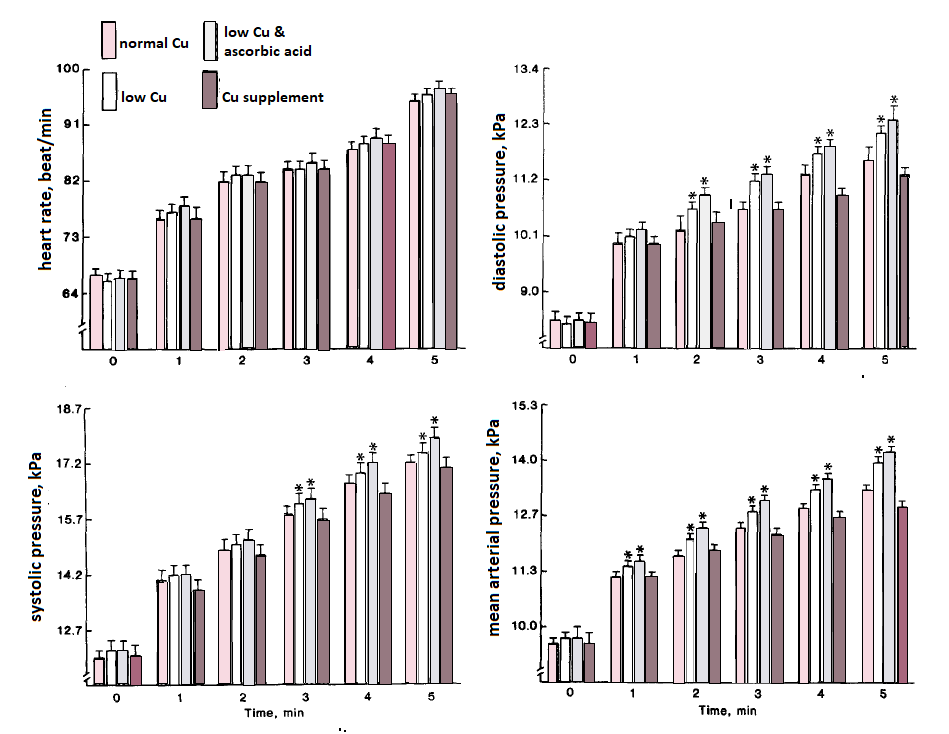
    The heart rate was not different before the hand grip exercise started at time 0. The heart rate gradually increased during the 5 minutes of the exercise. The amount of copper made no difference. Overall significance of a copper effect (P<0.001) Maximum voluntary contraction was unaffected by copper.

    The heart rate was not different before the hand grip exercise started at time 0. The heart rate gradually increased during the 5 minutes of the exercise. The amount of copper in the diet made no difference.

    When the subjects were on low copper diets, their diastolic blood pressures increased more within 2 minutes (P<0.05) of hand grip exercise. (P<0.001) When the subjects were on low copper diets, their systolic blood pressures increased more within 3 minutes (P<0.05) of hand grip exercise.

    Mean arterial pressure was noticeably elevated in the copper deficient subjects after only 1 minute of the hand grip exercise. Recall from Poiseuille’s Law that it is the pressure differential, ∆P, and resistance that drives flow.

    Lukaski and coworkers discussed the possibility of vascular tone being altered by the impaired collagen cross linking enzyme lysyl oxidase. This group were experts in Cu/Zn superoxide dismutase 3 and angiotenin II activation of super oxide generator NADPH oxidase.

    Ceruloplasmin loading of copper predicts MAP in response to exercise

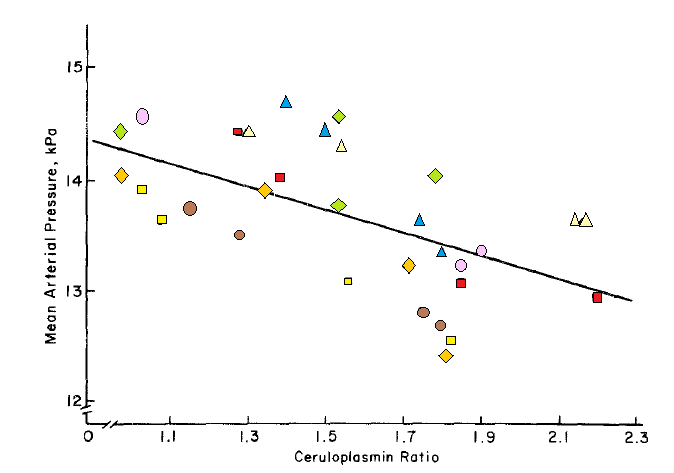
    A summary figure related the mean arterial pressure to the hand grip test to the “ceruloplasmin ratio.” This ratio is the enzymatic activity to the amount of the protein as measured by radial immune-diffusion.  Each symbol represents an individual participant.

    Liberty was taken to draw colored symbols over the poorly resolved black and white symbols in figure 2 of the Lukaski publication. “With the exception of
    one volunteer in whom this relationship was weak (r=-0.50), the individual relationships had correlation coefficients ranging from – 0.90 to – 0.99 (p<0.01). For the entire study sample, the ceruloplasmin ratio was a significant (p < 0.0004) predictor of mean arterial pressure at the end of the
    hand grip test.”

    The authors discussed the locus ceruleus as an integrator of afferent input with efferent output that control adrenergic cardiovascular reflexes (locus ceruleus-noradrenergic system or LC-NA system). This locus was also noted as being a copper enriched region of the brain. Blood pressure control during isometric hand grip exercise involves sympathetic (noradrenergic) afferent from skeletal muscle neurons.   Lukaski and coworkers (1988) concluded that the involvement of copper required further study.

    POTS and Long Covid?

    The big question here is if POTS patients and those with Long Covid autonomic dysfunction are copper deficient. David Goldstein of the NIH has reviewed possible causes of POTS in Long Covid. Dr Goldstein gives a more in depth overview of some aspects of the ANS than covered in this post. He mentions autoimmunity. We have covered our research on NMDA repceptor suto antibodies in Long Covid in another post. Blitshteyn and Brook (2017) described a female patient who had received the HPV Cervavix vaccine who later developed POTS. This patient tested positive for anti-NMDA receptor antibodies, responded positively to immunomodulatory therapy, and had her symptoms come back when the therapy was discontinued. The CDC has addressed this association.

    POTS and gluten sensitivity?

    Copper deficiency in celiac disease has been addressed elsewhere. Are POTS patients more likely to have self reported gluten intolerance or bonefid celiac disease? Hugo Penny and coworkers (2016) of the Royal Hallamshire Hospital in Sheffield, UK surveyed 100 POTS patients. Four of the 100 POTS patients had serologically and biopsy proven celiac disease. Gluten sensitivity was reported in 42% of these 100 POTS patients versus 19% of the control population.

    References

    • Blitshteyn S, Brook J. (2017) Postural tachycardia syndrome (POTS) with anti-NMDA receptor antibodies after human papillomavirus vaccination. Immunol Res. 2017 Feb;65(1):282-284.
    • Goldstein D. S. (2021). The possible association between COVID-19 and postural tachycardia syndrome. Heart rhythm, 18(4), 508–509.
    • Hoggard N, Hadjivassiliou M, West JN, Sanders DS. Is there a relationship between gluten sensitivity and postural tachycardia syndrome? Eur J Gastroenterol Hepatol. 2016 Dec;28(12):1383-1387
    • Lukaski HC, Klevay LM, Milne DB.(1988) Effects of dietary copper on human autonomic cardiovascular function. Eur J Appl Physiol Occup Physiol. 58(1-2):74-80.
    • Mandela P, Ordway GA. (2006) The norepinephrine transporter and its regulation. J Neurochem. 2006 Apr;97(2):310-33. doi: 10.1111/j.1471-4159.2006.03717.x. Epub 2006 Mar 15. PMID: 16539676 Free article.
    • Neselioglu S, Ergin M, Erel O. (2017) A New Kinetic, Automated Assay to Determine the Ferroxidase Activity of Ceruloplasmin. Anal Sci.33(12):1339-1344.
    • Qamar MI, Read AE.(1987)Effects of exercise on mesenteric blood flow in man. Gut. 28(5):583-7.
  • IL-1 and copper

    We have heard about IL-1 as part of the Covid-19 cytokine storm. It is often labeled as a bad player in many varieties of inflammation. IL-1 is actually a family of small proteins, IL-1β being the most notorious, pro-inflammatory member. IL-1β is part of many inflammatory diseases. This post is not intended to offer medical advise but rather to give busy MDs some background information to continue their educations.

    In a 1989 study looked at human rheumatoid arthritis patients who had relatively high levels of the copper/iron carrier ceruloplasmin but not erythrocyte Cu/Zn superoxide dismutase activity. Activity levels of Cu/Zn SOD increased after 4 weeks of copper supplementation (2 mg/day). For obvious reasons, the Cu/Zn SOD activity of inflamed tissues was not investigated. Cell cultured experiments with human fiborblasts revealed thatinterleukin-1 elevated Cu-Zn SOD activities in cultured fibroblasts.

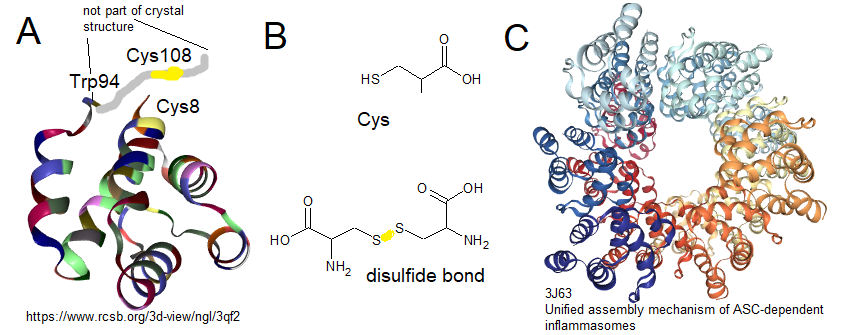
    IL-1 is produced by inflammasomes, protein assemblies that contain a protein called NLRP3/NALP3. In 2011 Bae and Park identified a disulfide bond between Cys8 and Cys108. The last few amino acids, of which was Cys108, were not resolved in this crystal structure.

    fff

    A. From Bae and Park, crystal structure of pyrin domain of NLRP3. A hypothetical portion of the domain from Trp94 to the C-terminus is scribbled in. While not in the crystal structure Cys8 and Cys108 can form disulfide bonds B Cysteine (Cys) can form disulfide bonds with other Cys. C. NLRP3 pyrin domains can bind to each other or pyrin domains in ASC.

    fff

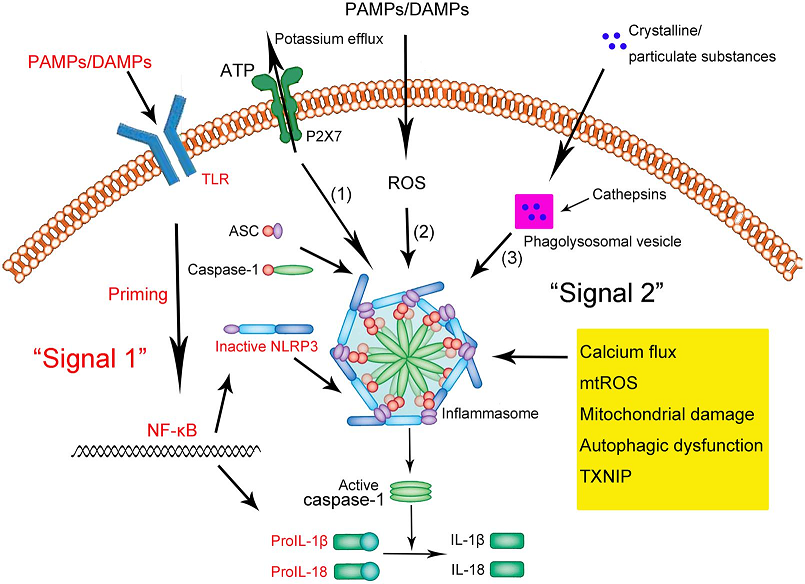
    Figure 1 from the Shao [1] Review.
    • Gram negative lipopolysaccharide, pathogen and danger associated molecular patterns (PAMP. DAMP), and such may be recognized by TLR4, which signals the nucleus to produce more inactive IL-1, NLRP3, and so on [2].
    • Particular irritants from inorganic particles to beta amyloid deposits may be phagocytosed. When these phagosomes rupture, the protease cathepsin, and assorted irritants are released into the cell.
    • Finally, reactive oxygen species may trigger inflammasome assembly.
    • In addition to containing the pyrin domain with the redox sensitive disulfide bond, the NLRP3 protein belongs to the family of nucleotide-binding and oligomerization domain-like receptors (NLRs)[2]
    • Adapter protein apoptosis-associated speck-like protein (ASC) A variety of signals cause NLRP3 to open up and bind ASC. This complex activates
    • Procaspase-1 (green ellipse) is an and self inhibited inactive protease. Binding to the NLRP3/ASC complex allows self digestion of the inhibitor portion (rose circle)
    • Active caspase-1 cleaves inactive proIL-1β to an active cytokine.

    The paradoxical role of Cu/Zn SOD1

    Chelation therapy not so fast!

    Deigendesch and coworkers tested the hypothesis that copper causes inflammation. These authors demonstrated that NLRP3 inflammasome activation is blocked by removing copper from the active site of superoxide dismutase 1 with the copper chelator tetrathiomolybdate, [4] Inflammasome function is also impaired in Cu/Zn SOD deficient mice. Copper regulation was found in macrophages, but not monocytes, both in mice and humans. Chelation of bioavailable copper resulted in attenuated caspase-1–dependent inflammation. The authors reported reduced susceptibility to LPS-induced endotoxic shock. Because the chelator tetrathiomolybdate is clinically used to treat Wilson’s Disease, it might prove useful in inflammatory diseases involving the NLRP3 inflammasome.

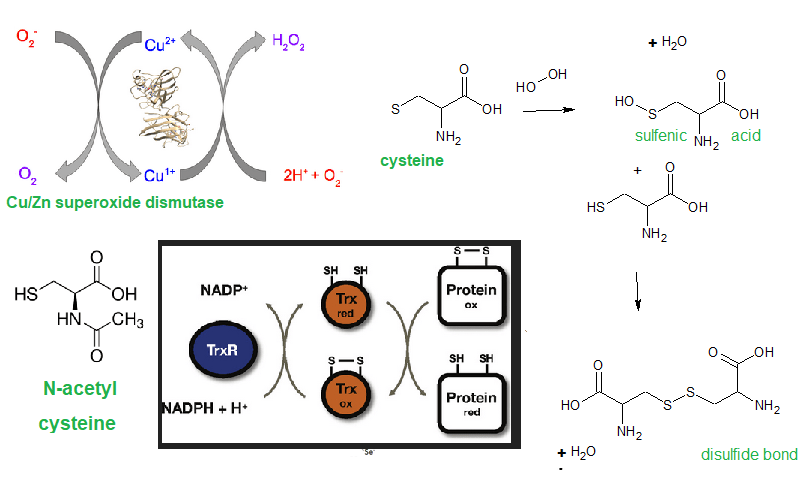
    Top left, Cu/Zn SOD produces hydrogen peroxide as a byproduct. H2O2 reacts with cysteine to produce cysteine sulfenic acid. Cysteine sulfenic acid reacts with reduced cysteine to produce a disulfide bond. Thioredoxin (Trx) restores protein disfuldide bonds to their reduced state.

    Hydrogen peroxide has been described as a signalling molecule, or second messenger (5]. This disulfide bond of NRLP3 could be dependent on H2O2 from superoxide dismutase. While H2O2 reacts with thiols, it really is not as damaging as super oxide. Catalase also depletes hydrogen peroxide: H2O2 → 2 H2O + O2

    The thiol of cysteine in proteins may form disulfide bonds with other protein scyteine thiols or with a low molecular weight thiol (PSSR, where R is anything and P is a protein. ) Any reduced low molecular weight thiol compound (R’SH) can take things back to normal.

    protein âˆ’ SSR + R′SH â‡„ protein âˆ’ SH + RSSR′ [5]

    Could N-acetyl cysteine be a source of reducing equivalents like the protein thioredoxin? Indeed, copper and N-acetyl cysteine have been suggested as therapies for Covid-19 in conjunction with standard treatments [6]

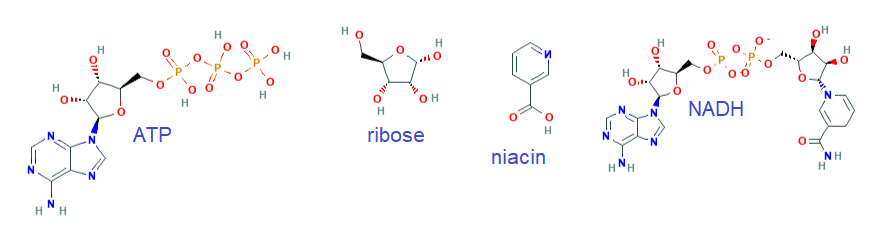
    And finally, what about the niacin in Cu(I)NA2? Could niacin be a precursor for more NADH + H+ that provides thioredoxin with reducing equivalents to inactivate the IL-1β producing inflammasome?

    Niacin can be a precursor for NADH, a small molecule that supplies reducing equivalents to thioredoxin, and many other things

    If you are a physician thinking about putting your patient on a chelation therapy to reduce inflammation… maybe not so fast. We need Cu/Zn SOD to scavenge super oxide. H2O2 is a less reactive messenger that tells the body there’s trouble via inflammasomes and IL1β. Your patient just needs reducing equivalents to turn the inflammasome off after it’s done it’s job.

    References

    1. DiSilvestro RA. (1989) Effects of inflammation on copper antioxidant enzyme levels.Adv Exp Med Biol. 1989;258:253-8
    2. Bae JY , Park HH (2011) Crystal structure of NALP3 protein pyrin domain (PYD) and its implications in inflammasome assembly J Biol Chem 286(45):39528-36. [PMC free article]
    3. Shao BZ, Xu ZQ, Han BZ, Su DF, Liu C. (2015) NLRP3 inflammasome and its inhibitors: a review. Front Pharmacol. 2015 Nov 5;6:262 [Cross Ref]
    4. Deigendesch N, Zychlinsky A, Meissner F. (2018) Copper Regulates the Canonical NLRP3 Inflammasome. J Immunol. 2018 Mar 1;200(5):1607-1617. [PMC free article]
    5. Forman HJ, Maiorino M, Ursini F.(2010) Signaling functions of reactive oxygen species. Biochemistry. 49(5):835-42. [PMC free article]
    6. Andreou A, Trantza S, Filippou D, Sipsas N, Tsiodras S. (2020)COVID-19: The Potential Role of Copper and N-acetylcysteine (NAC) in a Combination of Candidate Antiviral Treatments Against SARS-CoV-2. In Vivo. 2020 Jun;34(3 Suppl):1567-1588 [Cross Ref]
    7. Freeman TL, Swartz TH. (2020) Targeting the NLRP3 Inflammasome in Severe COVID-19. Front Immunol. 2020 Jun 23;11:1518. [PMC free article]

  • Copper Chaperones

    Copper Chaperones

    Starting from Ctr1

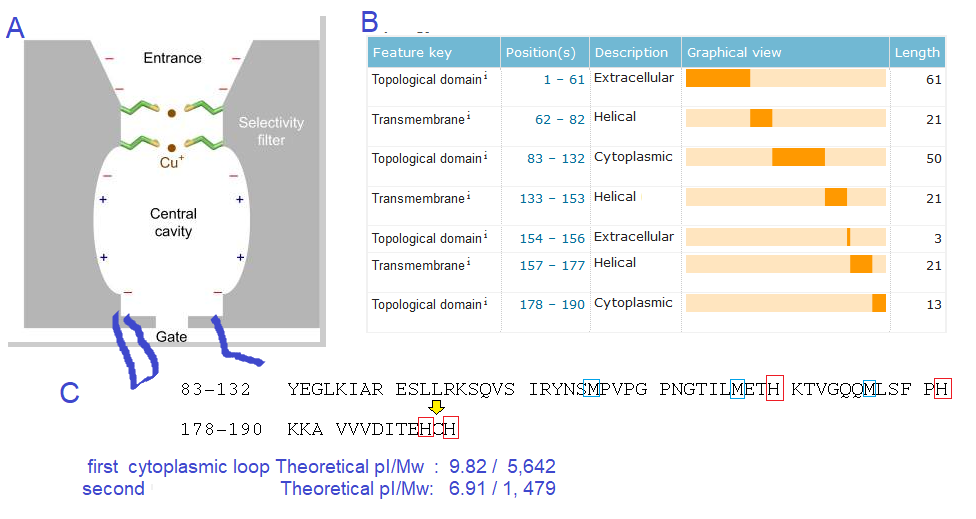
    Let us continue the journey from Ctr1 to some intracellular copper chaperones.  The cyoplasmic loops might have their own gating functions, as suggested by Ren (2019), see Ctr1 post

    chaperones_1
    Figure 1 Cytoplasmic loops of Ctr1 A.Ren (2019) cartoon of Ctr1 channel with cytoplasmic loops drawn in, blue. B. UniProt.org topology of human Ctr1 C. Expasy estimation of the isoelectric points and molecular wieght (Mw) of the loops.

    Just looking at the sequences, there are a lot of arginines (R) and lysines (K) Fig 1C). Both of these are positively charged amino acids, just like Cu+.  Expasy has a tool for calculating the molecular weight and isoelectric point (pI) of sequences.   The isolelectric point is the pH at which the peptide has no net charge.  At the intracellular pH of 7.5,

    • the first loop will have a net positive charge
    • whereas the second loop will essentially be uncharged.

    One may speculate that only when a chaperone neutralizes the positive charge on the first cyoplasmic loop will positively charged Cu+  be let out of the “gate.”

    What is a chaperone?

    A chaperone is a person who accompanies young people, on social occasions to prevent an illicit transfer of electrons. In some cases a protein chaperone refers to a protein that assists another protein in proper folding or unfolding. In the case of copper chaperones, both definitions are true. Copper chaperones prevent the illicit transfer of electrons from copper to molecular oxygen. They also assist in proper loading and folding of copper into proteins that use copper as a cofactor.

    chaperones_2
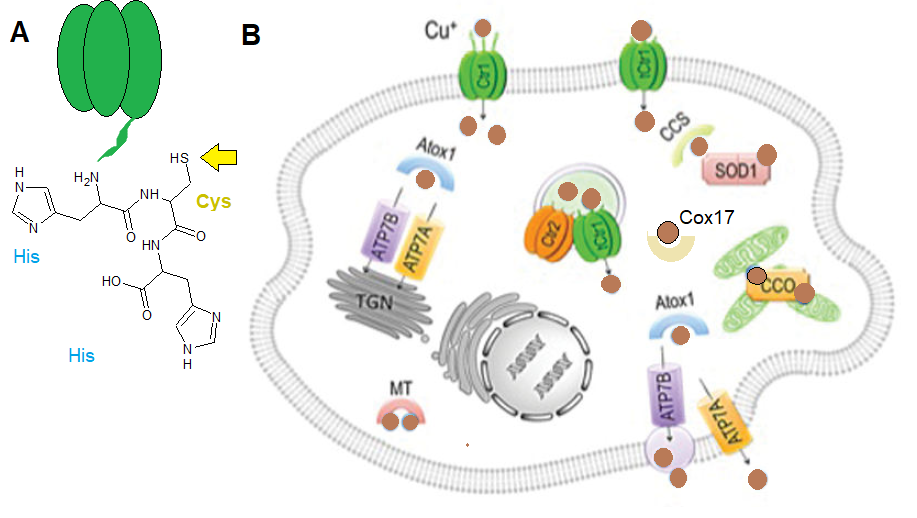
    Figure 2 The bucket brigade. A. Ctr1 and the His-Cys-His motif of the C-terminus of he second cytoplsmic loop of Figure 1c. B. an overview of cellular chaperones and their targets.

    Reduced glutathione is included in this transport process (Hatori 2017).
    Another twist to this story comes from the work of Maryon and coworkers. These authors demonstrated the need for a supply of reduced glutathione in order to facilitate loading of copper chaperones with copper. This suggests that only Cu+ can be loaded into the chaperones. It is curious that Ctr1 is usually depicted as wide at the intracellular lip. Is this so that copper chaperones can approach it to receive Cu+ or is this for glutathione access? HCH is another way of reiterating the histidine-cysteine-histidine motif.

    Use of thiols to transfer Cu+

    Our featured image shows two proteins engaged in a disulfide bond, just liked oxidized glutathione.  Copper chaperones do this in the process of transferring Cu+ .  We may get into the work of Banci and colleagues in a later post.

    Cu+ transported down the affinity gradient.

    Cu+  doesn’t stick around on the exit gate of Ctr1.  It travels from low affinity members of the “bucket  brigade” to high affinity enzymes. The Hatori publication has a clever way of visualizing this transfer.

    • Abundance of  the Cu+ chaperone indicated by size of the elipse.
    • Cu+  affinity indicated by the green color intensity.

    Three main destinations of Cu+ 

    1. Mitocondria: cytochrome C oxidase via Cox17
    2. cytosol: Cu/Zn superoxide dismutase 1 via CCS
    3. secreted proteins: lysyl oxidases (LOX),  ; DBH, dopamine-β-hydroxylase (DBH), Cu/Zn superoxide dismutase 3 (SOD3),  peptidylglycine-α-amidating monooxygenase (PAM) via Atox1 and ATP7A.

    Metallothionein (MT) is a high affinity place to store excess copper.

    chaperones_4
    From Hatori, 2017

    Take home

    From the entrance to Ctr1 to chaperones and insertion into enzymes, it is all about Cu+.  How enzymes use copper for functions necessary for health and life itself is another story for another post!  If you are interested in a copper supplement in the +1 oxidation state, visit the Mitosynergy store.

    References

    Banci L, Bertini I, Ciofi-Baffoni S, Janicka A, Martinelli M, Kozlowski H, Palumaa P.(2008)A structural-dynamical characterization of human Cox17. J Biol Chem. 283(12):7912-20.

    Hatori Y, Inouye S, Akagi R.(2017) Thiol-based copper handling by the copper chaperone Atox1.IUBMB Life.69(4):246-254

    Maryon EB, Molloy SA, Kaplan JH. (2013)Cellular glutathione plays a key role in copper uptake mediated by human copper transporter 1. Am J Physiol Cell Physiol. 304(8):C768-79.


  • Ceruloplasmin

    Ceruloplasmin

    Ceruloplasmin, the immune system

    Most of this document was written for an M.D. interested in giving the Mitosynergy product to his patients. This post is a compilation of our discussions.  Ceruloplasmin keeps copper and oxygen deep within its surface.

    ceruloplasmin_1
    A visit to the protein database of crystal structures, RCSB.org, allows for exploration. Shown here are a backbone “cartoon” and surface plot of ceruloplasmin. Copper is depicted as copper spheres.

    Here we have an image of ceruloplasm crystallized with just Cu, oxygen, glycerol and N-acetylglucosamine. No iron was used in this particular crystal structure. Sometimes X-ray crystallographers add other small molecules to enable purified proteins to form crystals. The images were produced by the software at rcsb.org. The image on the left is in “cartoon” mode. Only the backbone of the protein is shown. The image on the right is a “surface plot” of what a water molecule might see as it approaches the protein. Very little copper is visible from the surface. A region in the center of the protein with oxygen being complexed to copper is enlarged.

    Ceruloplasmin, a ferroxidase I and more

    Produced by the liver, transported by the blood, ceruloplasmin has been found in glial cells (CNS and retina) and Sertoli cells (testis) (Vashchenko 2013). Enzymatic reactions (Vashchenko 2013) include

    • Ferroxidase
    • NO-oxidase
    • glutathione-peroxidase activities
    • amine oxidase: biogenic amines, xenobiotic amine oxidase

    ceruloplasmin_2a
    Note the interaction between copper and iron in ceruloplasmin.

    Ceroplasmin’s multiple roles as a

    • monoamine oxidase via copper
    • an iron carrier
    • copper carrier

    was examined the hippocampus of the brains of ceruloplasmin knockout mice (Texel 2012). “Knockout” means that the gene has been removed from, or knocked out of, the genome.

    Serotonin

    Serotonin was one of the main neurotransmitters examined. The authors speculated that because iron is needed for the synthesis of serotonin and other monoamine neurotransmitters, ceruloplasmin might be a carrier of iron to the brain.

    Ceruloplasmin deficiency induced by knock out of the gene decreased the iron, serotonin, and norepinephrine in the hippocampus (Texel 2012).

    Corticosterone

    Corticosterone, a rodent regulator of energy, immune reactions, and stress responses, was increased in the ceruloplasmin knockout mice (Texel 2012). Some cognitive and motor function tests revealed an anxiety phenotype.

    ceruloplasmin_2b
    Iron handling in the brain

    Ceruloplasmin constitutes the largest serum copper pool. Circulating ceruloplasmin is not absolutely required for copper delivery to tissues, demonstrating that other copper-binding molecules exist (Gulec 2014).

    Transcription and translational control

    • Mazumder and coworkers (2006) found that gamma interferon (INFγ) not only induced the transcription of ceruloplasmin mRNA but also regulated its translation to protein.
    • The translational silencing of the ceruloplasmin mRNA in U937 monocytic cells was shown to require binding of a cytosolic inhibitor complex, IFN-Gamma-Activated Inhibitor of Translation (GAIT), to a specific GAIT element in the Cp 3’-UTR.
    • The authors speculated that ceruloplasmin may have injurious consequences and require down-regulation. A delay in doing so could exacerbate macrophage induction of ceruloplasmin synthesis and delay or prevent the normal resolution of inflammation.

    ceruloplasmin_3
    Creruloplasmin protein production control,    A. The level of mRNA transcripts can be controlled by repression gene silencing such as promoter methylation and transcription factors that bind specific sequences of DNA. Transcription factor complexes might also bind small molecules in the environment to give feedback control of message generation. PolA is the RNA polymerase that translates the DNA sequence to messenger RNA. B. Messenger RNA is translated into proteins at the Ribosome. There are untranslated regions (UTR) that have three dimensional structures that can bind protein complexes that are also responsive to small molecules in the environment. These complexes promote as well as inhibit translation of the message into a protein. Shown here is the GAIT complex ready to bind to the 3’-UTR of the ceruloplasmin message. If it were drawn to scale, the GAIT complex would prevent the incoming tRNA + amino acid from binding to the mRNA.

    Suggestion of circulating copper deficient ceruloplasmin

    Ranganathan and coworkers (2011) examined the impact of copper and iron excess and deficiency on the amount of ceruloplasmin in the serum of weaning rats. They not only looked at the amount of message but also the amount of translated protein and two enzyme activities of ceruloplasmin.

    • ferroxidase
    • amine oxidase (copper catalyzed)

    This table is a simplified form of the original publication. Amine oxidase and ferroxidase activity are estimated from the fig 3 bar graph of the publication. The other values were copied from table 2.

    treatment mRNA Serum protein Ferroxidase activity Amine oxidase Serum Cu, ppb Serum Fe, mg/L
    Control 1 1 1 1 460 3.3
    Cu extra 0.9 1.3 1.7 1.8 76 3.1
    Fe deficient 1.4 1.5 1.8 1.9 650 0.34
    Fe def/Cu Extra 1.7 1.5 2 2.2 790 0.64
    Cu deficient 2.3 0.15 0 0.04 30 1.6
    Fe D/Cu D 1.3 0.74 0 -0.04 20 0.33

    Highlighted cells are significantly different from the control.

    • Dietary manipulations of Fe and Cu did not change the amount of message in a way that could be distinguished from population variance.
    • Serum ceruloplasmin was changed in response to copper deficiency and Fe deficiency suggesting, but not proving, changes in mRNA translation outside the GAIT complex.
    • The changes in enzyme activity, disproportional to the amount of protein, suggested the presence of circulating copper deficient ceruloplasmin.
    • Amine oxidase, a Cu mediated reaction, increased with copper excess and Fe deficiency but not normal Cu.
    • Ferroxidase activity was very sensitive to Cu deficiency but not Fe deficiency as long as dietary Cu was normal.

    Ceruloplasmin and pathogen response

    Gitlin and coworkers (1992) examined the influence of copper sufficiency and deficiency in the diets of rats exposed to inflammatory agents:

    • lipopolysccharide (LPS)
    • interleukin 1α.

    LPS is a component of the cell wall of Gram negative bacteria and a pro-inflammatory agent.

    IL-1α is a primary mediator of inflammation secreted by macrophages.

    • Inflammatory agents like LPS and IL-1α increase ceruloplasmin transcripts
    • TNFα and the GAIT complex interfere with those transcripts being translated into ceruloplasmin protein.
    • Both IL-1α and LPS increased hepatic ceruloplasmin mRNA content.
    • Ceruloplasmin protein was measured by the ELISA assay in normal and copper-deficient animals.

    making apo ceruloplasmin

    Neither mediator increased ceruloplasmin ferroxidase activity in the copper-deficient group. Newly synthesized ceruloplasmin secretion rates were the same for isolated hepatocytes from normal and copper-deficient rats despite little or no holo-ceruloplasmin synthesis in hepatocytes of copper-deficient rats.

    Ceruloplasmin must pick up copper from somewhere

    The authors concluded that hepatocyte copper content has no effect on hepatic ceruloplasmin-gene expression or ceruloplasmin biosynthesis. The incorporation of copper into newly synthesized ceruloplasmin is not a rate-limiting step in the biosynthesis or secretion of the apoprotein (copper free) from rat hepatocytes.

    Treatment Ferroxidase activity (mol/min /L) ELISA, mg/dL serum Cu, mg/mL
    Cu-sufficient 24.5 ±4.5 27.6±1.6 0.81 ±0.17
    Cu-deficient 1.6±0.5 11.0± 1.4 0.014±0.012
    Cu-deficient + Cu injection 25.1 ±2.4 20.0±3.1 0.73 ±0.06
    Cu-deficient + IL- 1 2.3±1.0 17.5± 5.6 0.05 ± 0.03
    Cu-deficient , Cu + IL- 1 31.1±5.1 26.6± 16.8 0.74±0.10
    Cu-deficient + LPS 0 28.0± 3.4 0.04±0.04
    Cu-deficient + Cu + LPS 24.9±4.0 32.6± 10.2 0.79±0.12

    What we are seeing is that there might be a lot of ceruloplasmin in the blood that is copper depleted or apo because we see that dietary and injected copper can control the ferroxidase activity of ceruloplasmin (Gitlin 1992, Ranganathan 2011).

    Loading ceruloplasmin with “proper copper” in the gut

    In anotherblog we addressed how the Cu+ of Cu(I)NA2 might be absorbed.  We looked at one model in which Cu+ is absorbed by Ctr1 in epithelial cells and then secreted into the blood by.   ATP7A secreting Cu+ willy nilly into the blood stream just isn’t satisfying.  Since ATP7A loads cderuloplasmin in the liver, why not in the blood?

    References

    Gitlin JD, Schroeder JJ, Lee-Ambrose LM, Cousins RJ.(1992) Mechanisms of caeruloplasmin biosynthesis in normal and copper-deficient rats. Biochem J. 282 ( Pt 3):835-9.

    Gulec S, Collins JF. (2014) Molecular mediators governing iron-copper interactions. Annu Rev Nutr. 34:95-116.

    Mazumder B, Sampath P, Fox PL.(2006)Translational control of ceruloplasmin gene expression: beyond the IRE. Biol Res. 39(1):59-66.

    Prohaska JR.(2011) Impact of copper limitation on expression and function of multicopper oxidases (ferroxidases). Adv Nutr.2(2):89-95

    Ranganathan PN, Lu Y, Jiang L, Kim C, Collins JF. (2011) Serum ceruloplasmin protein expression and activity increases in iron-deficient rats and is further enhanced by higher dietary copper intake. Blood. 118(11):3146-53.

    Texel SJ, Camandola S, Ladenheim B, Rothman SM, Mughal MR, Unger EL, Cadet JL, Mattson MP. (2012)Ceruloplasmin deficiency results in an anxiety phenotype involving deficits in hippocampal iron, serotonin, and BDNF. J Neurochem.120(1):125-34

    Vashchenko G, MacGillivray RT. (2013) Multi-copper oxidases and human iron metabolism. Nutrients.5(7):2289-313.

  • Fatty Liver Disease

    Fatty Liver Disease

    Please note in readying this report on Cu(I)NA2  and fatty liver disease, the authors did not compare Cu(I)NA2  with another dietary copper supplement such as cupric (+2) citrate.  Therefore the conclusions are not unique to Cu(I)NA2. Do not take anything in this post as medical advice. Feel free to discuss this post with your physician.

    This particular study came out of the Department of Physiology of Aswan University, in Aswan, Egypt [1].  The Liver Foundation estimates that approximately 30% of the U.S. population suffers from non alcoholic fatty liver disease and 5% are afflicted by  its subtype nonalcoholic steatohepatitis.  These numbers translate to about 100 million individuals in the United States living with  nonalcoholic fatty liver disease.  The global prevalence of fatty liver disease is  about as high.  Hegazy and coworkers were not interested in the mechanisms of moving fats out of the liver and into the blood stream.  They simply wanted to know if Cu(I)NA2 might relieve the inflammation associated with fatty liver disease.  Copper might have a role in both.

    Fatty liver disease

    Fatty liver disease is, very simply, the abnormal accumulation of fats in the liver.  Alcoholism is a main cause of fatty liver disease.  Non alcoholic fatty liver disease my be caused dietary deficiencies, metabolic abnormalities, drugs and toxins, and immune responses. These  authors chose to induce FLD in  rats with a methionine- and  choline deficient diet (MCDD).

    What are methionine and choline?

    Methionine is an essential amino acid that participates in many enzymatic reactions as a methyl donor.  DNA methylation is one of many of these reactions.  Note the methyl group in Figure 1c.  Choline (Fig 1c) is the basic constitute of lecithin (phosphatidyl choline), a phospholipid found in plant and animal cells.  Choline may also serve as a methyl donor.  Hydrogens in the structures in Figure 1c are “understood.”  The end of the sticks are understood to be methyl groups (-CH3).  Dietary deficiency choline may result in accumulation of fat in the liver due to lack of very low density lipoprotein (VLDL) needed to transport fats out of the liver.  Methionine deficiency may cause general liver damage that may be clinically measured by the release of the liver enzyme alanine amino transferase (ALT) into the blood.    PubChem tells us that choline may be used to synthesize betaine.

    Choline deficiency in dairy cattle transitioning from being pregnant to being milk producers is an industry concern [2].  One of the industry challenges is protecting the dietary choline from the contents of the rumen.

    FLD_1
    Figure 1 The intersection of a methionine [1] and b choline pathways.  c a structure of methionine and chloine. d In addition to B12, methyl synthase has Mg2+ cofactors.

    Why Copper?

    A 1999 study examined the influence of copper deficiency in rats on folate and homocysteine synthesis.  Hepatic folate, and plasma vitamin B-12 concentrations were similar in both groups [3].  Homocysteine in the blood plasma increased, most likely the result of a decrease in hepatic methionine synthase (MS) activity [3].  The authors speculated that MS might be a cuproenzyme in addition to requiring B12 cofactor.  Twenty years later, we still have no clue.  Rat methionine synthase has three amino acids that interact with  Mg2+ and two that interact with K+ these were found by following the UniProt line to  an X-ray crystal structure of methionine synthase. [4]

    FLD_2
    Figure 2 Interaction of amino acids in methionine synthase with ATP and free methionine , adapted from [4]

    One would think that if Cu2+  can substitute for Mg2+  in methionine synthase, we’d not know it by now.  Mg has only one oxidation state.   Cu has two.  The implications on the catalytic process would be interesting, if such a substitution were the case. The answer may lie in the affect of Cu on gene expression.

    Cu(I)NA2 protects the fatty liver from further damage

    FLD_3
    Figure 3 from [1]  Effect of CNC, Cu(I)NA2, on liver enzyme activity in the serum of rats with fatty liver (mean±standard deviation, n=10).Means with different superscripts in the same row are significantly different at p<0.05. CNC=Copper-nicotinate complex, MCDD=Methionine- and choline-deficient diet, ALT=Alanine aminotransferase, AST=Aspartate aminotransferase, GGT=Gamma glutamyl transferase

    Note that CNC,  Cu(I)NA2, brings the activities of liver in the serum down to control levels even in the presence of methionine and choline deficiency.

    FLD_4
    Figure 4 from [1]  Effect of CNC on oxidative/anti-oxidative markers in liver homogenate of rats with fatty liver (mean±standard deviation, n=10).  Means with different superscripts in the same row are significantly different at p<0.05. CNC=Copper-nicotinate complex, MCDD=Methionine- and choline-deficient diet

    Note that Cu(I)NA2, brings reduced glutathione to control levels in the fatty liver model.    Malondialdehyde, a marker of reactive oxygen species degradation of polyunsaturated fatty acids,   is  decreased to control levels. Cu(I)NA2 almost doubles superoxide dismutase activity [1].  The authors did not distinguish between superoxide mimetic activity of  Cu(I)NA2  alone or in intracellular Cu/Zn SOD1 or extracellular Cu/Zn SOD3 [1].   These authors also looked at expression at various cytokines associated with inflammation.

    Copper regulates gene transcription

    Liver gene expression was examined in a “tx-j” mouse model of Wilson’s Disease caused by a mutation in ATP7B.  ATP7B secretes excess copper into the bile.  Non functional in WD patients have a toxic overload of copper in their livers.  Shibata and  coauthors [5] looked at gene expression (Y-axis, Fig 5A) for many stages of development.  They were particularly interested in genes that regulate DNA methylation.  We will stick to our story line and single out two genes that might impact fatty liver disease.

    FLD_6
    Figure 5 How copper might regulate fatty liver disease A. Relative expression between two select genes in control mice and a mouse model of Wilson’s disease B. Re-visitation of Figure 1 with gene expression data

    We have no way of knowing if dietary copper of any sort mimics the effect of ATP7B defect (tx-j) copper overload.  In such a hypothetical methioinine synthase compensates for reduced dietary methione and possibly even choline.  By most accounts, S-adenosyl homocyetinase merely speeds up the equilibrium between homocysteine and S-adenosyl homocysteine.  The expression of this gene is decreased by copper overload.

    Could Cu(I)NA2  regulate gene expression in the fatty liver in a manner that facilitates fat export?  We do not know! A certain amount of caution needs to be used that genes are over-expressed when there is too much copper are not expressed enough when there is copper deficiency.

    Concluding remarks

    •   This featured Cu(I)NA2 study [1] was not concerned with enzymes involved with fatty liver disease.  The lessened liver damage and positive oxidative status results are the encouraging focus of this report.
    • Dietary deficiency in choline/methionine can impact can lead to fatty liver disease in dairy cattle [2].
    • Earlier rodent studies suggest a link between copper and the methionine cycle [3] .  Twenty years later there is no evidence that copper is a cofactor in methionine synthase.  Considering how magnesium does fit into the structure [4], it would be interesting if it did.
    • The most likely explanation for Reference [3] data is copper regulation of hepatic gene transcription, in particular methione synthase [5].
    • We want to emphasize that we are not making medical claims regarding Cu(I)NA2 in this post.  
    • We do see enough data to support investigative studies.

    References

    1. Hegazy AM, Farid AS, Hafez AS, Eid RM, Nasr SM. (2019) Hepatoprotective and immunomodulatory effects of copper-nicotinate complex against fatty liver in rat model. Vet World. 12(12):1903-1910. [PMC free article]
    2. Abbasi, I.H.R., Abbasi, F., Soomro, R.N. et al. Considering choline as methionine precursor, lipoproteins transporter, hepatic promoter and antioxidant agent in dairy cows.(2017) AMB Expr 7, 214 (2017). [Cross Ref]
    3. Tamura T, Hong KH, Mizuno Y, Johnston KE, Keen CL. (1999) Folate and homocysteine metabolism in copper-deficient rats. Biochim Biophys Acta. 1427(3):351-6.
    4. González B, Pajares MA, Hermoso JA, Guillerm D, Guillerm G, Sanz-Aparicio J (2003) Crystal structures of methionine adenosyltransferase complexed with substrates and products reveal the methionine-ATP recognition and give insights into the catalytic mechanism. J. Mol. Biol. 331 407-16
    5. Le A, Shibata NM, French SW, Kim K, Kharbanda KK, Islam MS, LaSalle JM, Halsted CH, Keen CL, (2014)Characterization of timed changes in hepatic copper concentrations, methionine metabolism, gene expression, and global DNA methylation in the Jackson toxic milk mouse model of Wilson disease. Medici V. Int J Mol Sci. 2014 May 7;15(5):8004-23. [Cross Ref]
  • Niacin benefits infections

    Niacin benefits infections

    Our featured image is a reminder that the niacin receptor is a member of the G protein coupled receptor family.  These receptors talk to each other via α subunits.

    Niacin is the other two thirds of Cu(I)NA2., a cuprous niacin supplement available on the market.  Most healthcare providers are probably aware of niacin’s many functions.

    A big unknown for us is if Cu(I)NA2 can even bind to the niacin receptor.  If nothing else, the other two thirds modulate the immune system.

    1. Niacin is a  precursor to NAD/NADH2, an H+ / electron carrier in numerous biochemical reactions.
    2. Niacin in high doses causes  dilation of the skin’s vasculature in a  response called “flush.”
    3. High doses of niacin are available in prescription form as Niaspan® and its generic equivalent “niacin ER” to lower  low density lipoprotein (LDL) cholesterol

    Niacin receptors in neutrophils and more

    Apart from being a precursor of NADH2, niacin has direct physiological actions on its  high and low affinity receptors

    1. NIACR1 is also known as the hydroxy carboxylic acid receptor (HCA2) GPR109A, HM74a, HM74b.NIACR2.
    2. NIACR2 is also known as HCA3 and GPR109B.  It is the low affinity receptor that is activated by amounts of niacin not normally found in the diet.

    Protein Atlas has compiled some nice data on the mRNA expression of GPR109A in blood cells.

    NiacinInfections1
    Top. Consensus mRNA expression of GPR109A, a niacin receptor, in blood cells. Bottom Data for dendritic cells, microglia, and macrophage are harder to obtain when they migrate into the tissue site of an infection. GPR109A expression in macrophage may be induced by lipopolysaccharide (LPS) from Gram negative bacteria.

    Niacin receptors and cAMP

    A 2008 study of Kostylina demonstrated that niacin promotes apoptosis, programmed cell death,  in mature but not immature neutrophils.  This action is mediated by the GPR109A G-protein coupled receptor.  G-protein coupled receptors may stimulate or inhibit the enzyme adenylyl cyclase.  AC converts cellular ATP to the second messenger cyclic AMP (cAMP).  Note the cyan colored  βγ subunit.  These will come into the discussion of potential niacin signalling in macrophage.

    NiacinInfections2
    A Niacin GPR109A pathways to vasodilation seen in “flush” B G-protein coupled receptors responsible for pro-survival pathways in neutrophils couple to Gs that activates adenylyl cyclase. The niacin receptor GPR109A couples with Gi that inhibits adenylyl cyclase (AC).

    G protein coupled receptor cross talk

    The authors did not discuss which G-protein coupled receptor on neutrophils might be simulating adenylyl cyclase by way of a Gs subunit.  The interleukin-2 and PGE2 receptors are G-protein coupled receptors that may stimulate neutrophils.

    Niacin, GPR109A, and macrophages

    Inflammatory mediators LPS ( Gram negative bacteria), zymosan (polysaccharide in  yeast, fungi),  lipoteichoic acid (LTA, Gram positive bacteria), polyinosine-polycytidylic acid (poly I:C, viruses) induce GRP109A in cultured marcrophage.  (Feingold 2014).   LPS was able to increase GPR109A mRNA up to 80x in less than 24 hours.  Niacin binding to GRP109A receptor may be a means of turning off the initial, innate immune response to pathogens.

    Niacin inhibits macrophages by decreasing cAMP

    Zandi-Nejad and coworkers (2013) examined the role of niacin on macrophage function.  Their primary focus was the role of macrophage in atherosclerosis rather than infectious diseases.  The”cytokine storm“, also known as cytokine release syndrome, has gained a lot of attention as a morbidity factor in COVID-19.

    1. Phagocytosis and chemotaxis  of blood wild type HCAR2+/+  and  HCAR2-/-   knock out mouse bone marrow derived marcophage (BBM) was shown to be decreased by nicotinic acid.  The HCAR2 gene codes for the GRP9A protein.
    2. LPS induction of cytokines TNFα, IL-6, IL-12p40, and IL-1β was measured in
    3. HCAR2+/+  and  HCAR2-/-   BBM.  Niacin lowered mRNA transcripts of all of these cytokines after 48 hours of exposure to LPS in the wild type but not in the BBM lacking the GPR109A receptors.

    Zandi-Nejad and coworkers (2013) remarked that their results differed from those of Rossi (1998) in that cAMP increases inhibited macrophage.  Shi (2017) suggested that niacin macrophage inhibition had more to do with the βγ subunit of heterotrimeric G proteins acting on protein kinase C.

    A look back, cAMP and macrophage activity

    Rossi (1998) demonstrated that intracellular cAMP decreased the ability of preipheral blood monocyte derived macrophage to phagocytize apoptotic neutrophils but not opsonized red blood cells.  These  authors also found that PGE2 to be a strong inducer of cAMP.

    A look ahead at recent publications

    Negreiros-Lima and coworkers (2020) have pushed the boundaries of earlier studies.  These authors used a non-hydrolyzable analog of cAMP, db-cAMP to activate protein kinase A pathways.  They addressed ways that cAMP modulates the M1 (pro inflammatory) to M2 (anti-inflammatory) transition.  To make matters more complicated, they introduced the M2 subsets: M2a, M2b and M2c.   We have no idea if the GRP109A receptor is expressed in all of these developmental stages.  An additional new term is  “effectocytosis” the clearance of neutrophils undergoing apoptosis.

    References

    Bühler S, Frahm J, Liermann W, Tienken R, Kersten S, Meyer U, Huber K, Dänicke S.(2018) Effects of energy supply and nicotinic acid supplementation on phagocytosis and ROS production of blood immune cells of periparturient primi- and pluriparous dairy cows. Res Vet Sci.116:62-71

    Guyton J., Campbell K., Lakey W. (2015) Niacin: Risk Benefits and Role in Treating Dyslipidemias. In: Garg A. (eds) Dyslipidemias. Contemporary Endocrinology. Humana Press, Totowa, NJ

    Feingold KR, Moser A, Shigenaga JK, Grunfeld C.(2014) Inflammation stimulates niacin receptor (GPR109A/HCA2) expression in adipose tissue and macrophages. J Lipid Res. 2014 Dec;55(12):2501-8. Link

    Kostylina G, Simon D, Fey MF, Yousefi S, Simon HU.(2008) Neutrophil apoptosis mediated by nicotinic acid receptors (GPR109A). Cell Death Differ.15(1):134-42  Link

    Negreiros-Lima GL, Lima KM, Moreira IZ, Jardim BLO, Vago JP, Galvão I, Teixeira LCR, Pinho V, Teixeira MM, Sugimoto MA, Sousa LP. (2020) Cyclic AMP Regulates Key Features of Macrophages via PKA: Recruitment, Reprogramming and Efferocytosis. Cells. 9(1). pii: E128. Link

    Rossi AG, McCutcheon JC, Roy N, Chilvers ER, Haslett C, Dransfield I. (1998) Regulation of macrophage phagocytosis of apoptotic cells by cAMP. J Immunol. 160(7):3562-8.Link

    Shi Y, Lai X, Ye L, Chen K, Cao Z, Gong W, Jin L, Wang C, Liu M, Liao Y, Wang JM, Zhou N. (2017) Activated niacin receptor HCA2 inhibits chemoattractant-mediated macrophage migration via Gβγ/PKC/ERK1/2 pathway and heterologous receptor desensitization. Sci Rep. 2017 Feb 10;7:42279 Link

    Zandi-Nejad K, Takakura A, Jurewicz M, Chandraker AK, Offermanns S, Mount D, Abdi R (2013) The role of HCA2 (GPR109A) in regulating macrophage function. FASEB J. 27(11):4366-74. Link