For you cooks out there, have you ever been cooking a pot of something and and added a second ingredient to compensate for the first? Soon the second ingredient becomes too much and needs to be dealt with. The Harder 2022 study started with the premise that hepatic copper is regulated by fat accumulation. It makes sense right? If we actually want to burn fat, we must have copper in the cytochrome C oxidase of our mitochondria. Mitochondria tend to be a source of superoxide. We might want to have some Cu/Zn super oxide dismutase (SOD) in addition to the Mn SOD of the mitochondria. When you add one ingredient to the pot, you have to add another…

Daniel Harder and others in Marie Heffern’s laboratory at UC Davis addressed this problem in a cell culture model of fatty liver disease. These coauthors observed that copper is sequestered in a manner that mimics copper deficiency when we the added too much fat to the hepatocyte pot. DepG2, liver hepatocarcinoma cells, were fed palmitic acid, a 16 carbon saturated fatty acid. Palm oil is a good source of this fatty acid.Figure 1 small, significant in copper handling proteins. Human hepatic carcinoma cells, HepG2, were grown in a standard medium with growth factor containing fetal bovine serum and antibiotics to control the growth of microorganisms.
HepG2 cells were stimulated with
- 250 µM palmitic (PA)
- 200 µM fatty acid free bovine serum albumin (BSA) control media.
Ctr1 and intercellular Cu, not measured.
Harder and coworkers included small molecule transport SLC46A3, but not the Cu+ transporter Ctr1 in their studies. They also did not measure intracellular copper in response to the PA. The Ctr1 gene, SLC31A1. This site has covered the selectivity of Ctr1 but not whether or not energy sources that require copper enzymes increase its expression. As a general note, the Harder study also did not examine Cu binding to the transcription factor Sp1 that turns off the transcription of CTR1/SLC31A1.
Figure 1D pumping out Cu with ATP7B
Let’s take a look at panel D of Figure 1 first. Harder and others used a technique called immunocytochemistry to visualize two proteins at one: Green is ATP7B, a membrane protein that uses ATP to put Cu+ into vesicle that are transported from the trans Golgi network (TGN) to the surface of the cell. Red in 1D is TGN46. a protein maker of Golgi vesicles. The Hepatocyte image on the right was modified from this public access site.

Hepatocyte copper handling proteins in response to PA
At the designated time periods cells were lysed and proteins dissolved in a detergent that gives them a negative charge. The proteins were separated on a “gel†based on their size as they move through the gel in response to a potential difference. Proteins in the gel were transferred to a membrane that was incubated with primary antibodies against the copper handling proteins of interest. These antibodies tend to be produced by injecting rabbits with purified proteins. The rabbit primary antibodies were detected by antibodies against the invariable parts of rabbit antibodies raised in another animal such a goat. These goat antibodies are tagged with a reporter. This is what we see here. Scientists always perform experiments many times. Nine times is abbreviated as â€n=9â€
Figure 1A pumping Cu+ out of the cell
ATP7B is the copper export protein that uses ATP to pump Cu+ out of the cell. PA in the cell culture medium causes a slight increase in this protein relative to the control. First protein levels are normalized to a cytoskeletal protein called β-actin. Then the normalization to the control is computed.
ATP7B is the copper export protein that uses ATP to pump Cu+ out of the cell. PA in the cell culture medium causes a slight increase in this protein relative to the control. First protein levels are normalized to a cytoskeletal protein called β-actin. Then the normalization to the control is computed.

The mean is another word for the average. The SEM is the standard error of the mean. It is simply an indicator of how much the replicates resemble each other. The smaller the SEM, the tighter the data. The “p†value indicates how confident we are that the results are not due to random chance. The smaller the p value,the more confident we are in the results. The general cutoff for “statistical significance†is p<0.05.
Figure 1B, copper chaperone superoxide dismutase
CCS, the copper chaperone for Cu/Zn superoxide dismutase We’ve discussed CCS and Cu/Zn on this site. If mitochondria are a major source of superoxide, and if they use electrons from fatty acid β-oxidation making more Cu/Zn SOD would sort of be a good idea when taking in more PA. This is what we see.
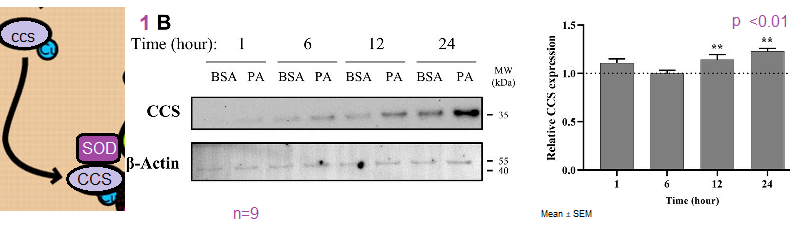
Figure 1C, a transcription factor for Cu/Zn SOD3
ATOX1 is next on the list as it is the chaperone for the export pump ATP7B. Note that unlike ATP7B in panel 1A, ATOX1 increases in response to PA. This site has touched on Atox1 as a transcription factor for Cu/Zn SOD3.
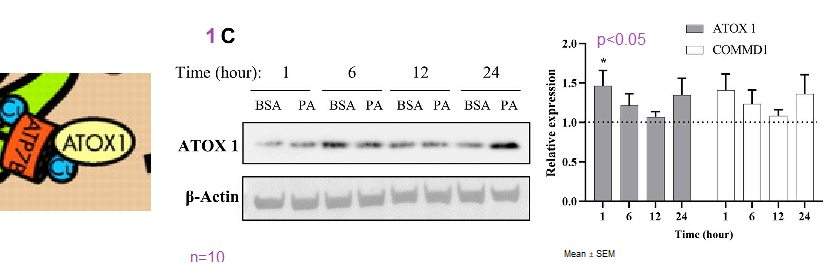
. COMMD1 is an accessory protein to ATP7B whose exact function, according to Harder and coauthors, is somewhat obscure. [1]
Figure 2 Other ways to export Cu
The liver makes ceruloplasmin. Ceruloploasmin is also a protein that transports copper and iron in the blood stream. Ferroxidase activity happens when ceruloplasmin (Cp) is replete with both copper and iron. As shown in figure 2, PA has not bearing on Cp secretion and activity.

Figure 3 binding up excess Cu
Metallothionein 2A is a putative Cu2+ storage protein. The level of this protein initially increases with PA and then returns to a level statistically less than the BSA control.

Figure 3 Redox balance
The Cu/Zn SOD1 initially increases yet returns to a level indistinguishable from the control. Figure 3C pertained to the ratio of oxidized to reduced glutathione. Oxidized glutathione is spent glutathione that can no longer reduced oxidized protein thiols or buffer metal ions like Cu+
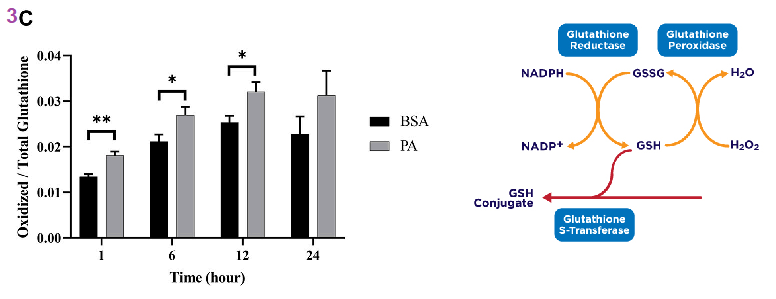
PA results in an initial loss of redox capacity.
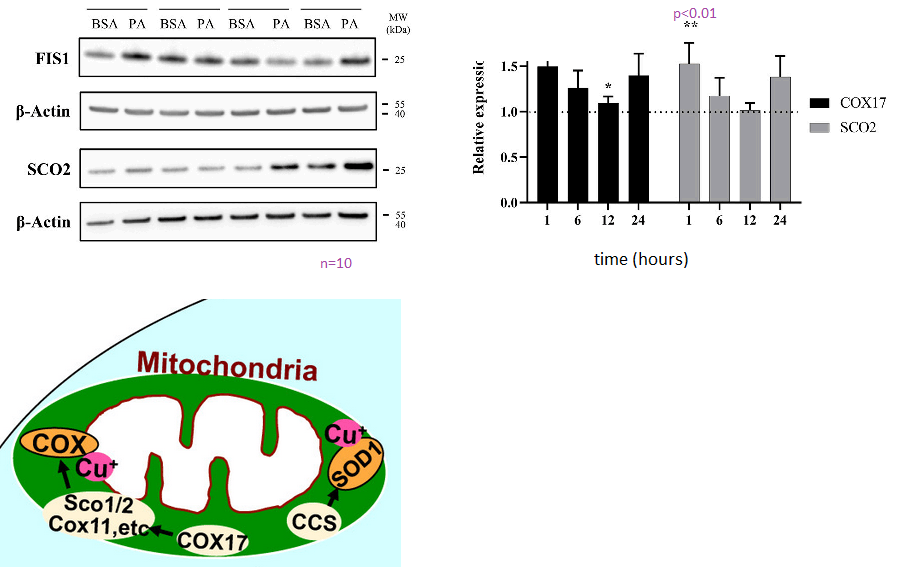
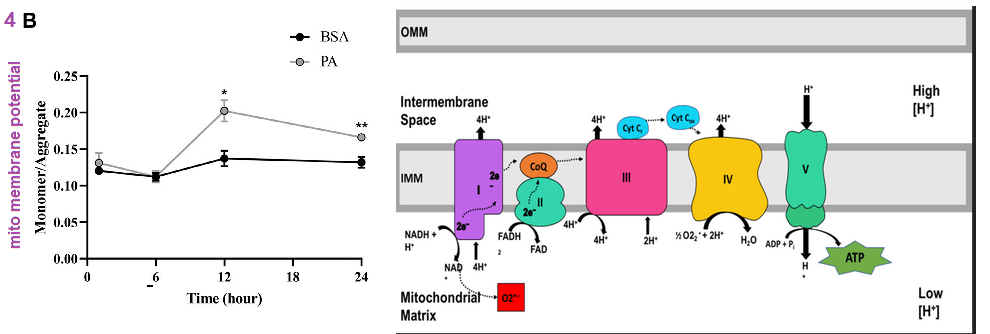
This is a nice, thought provoking study with a lot of unanswered questions.
- Did intracellular Cu ever increase in response to PA?
- What about Cu transporter Ctr1?
- What energy demands of these HepG2 cells could possibly be driving PA conversion to ATP? In other words, if there are no energy demands, what could possibly drive beta oxidation of PA and hence the need for copper?
- Would the same scenario in their summary Figure 5 also exist in cells that actually burn fatty acid to ATP, CO2 and H2O?
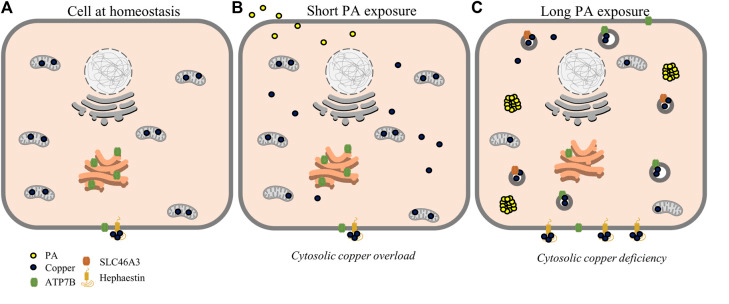
It just seems that the end game is to stop the accumulation of excess dietary fats in the liver.
Copper, niacin, other lifestyle factors, and NAFLD
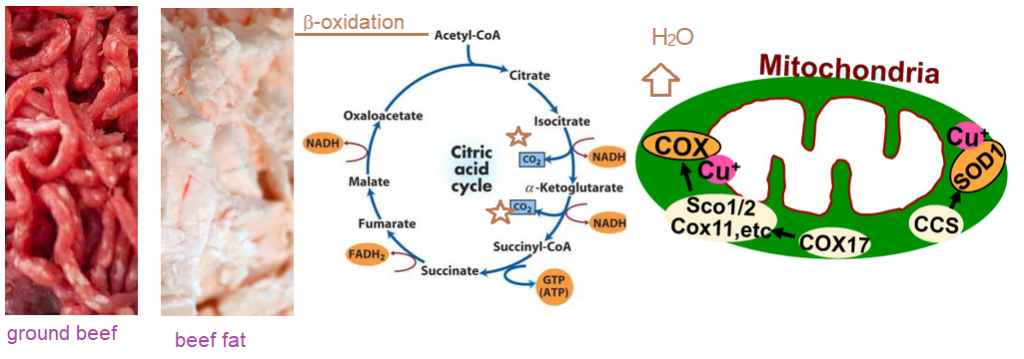
Perhaps the biggest issue we have is to also be finding a reservoir for dumping fat where it will be turned to CO2, H2O, and ideally, ATP. Brown adipose turns fat into CO2, H2O, and heat instead of ATP. An Iranian study points to exercising muscles. This introduction figure shows some ground beef with obvious fat deposits along with some beef fat. Beta oxidation of fatty acids from the triglycerides will enter the TCA (citric acid) cycle in two carbon units. These are released as CO2, which is starred. Cu+ is essential for completion of burning the fatty acids to CO2 (in the TCA cycle) and H2O.
What separates healthy eaters from the NAFLD pack?
This study took place at the  Metabolic Liver Disease Research Center at Isfahan University of Medical Sciences in 2019. [2] The study included 405 controls and 225 newly diagnosed cases of NAFLD. Participants were given a validated   semi-quantitative food frequency questionnaire (FFQ). The take home study was that these participants were eating wonderful Persian food. Their problem was they were eating too much of it and not getting enough exercise. The food cluster that proved to be protective is counter intuitive for those eating a Western diet.  Four major nutrient patterns. Were identified:
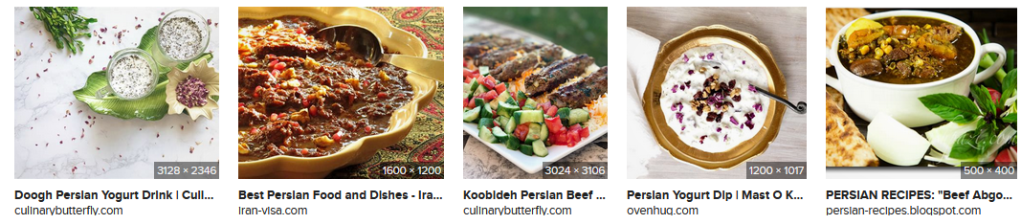
Yogurt and beef along with rice and vegetables are a common part of the Persian diet.


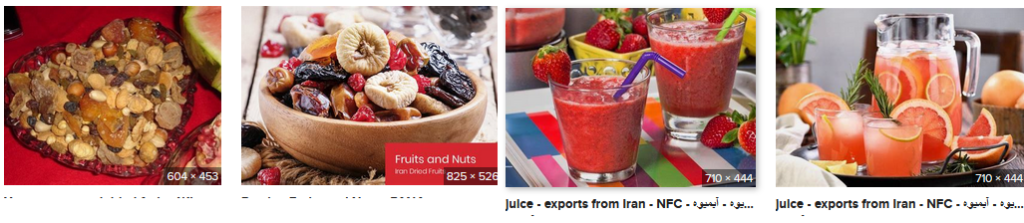
Persians like to enjoy dried fruits with their nuts. Oddly dried fruits were not part of this group.
So what is a healthy diet?
This is a table of correlation coefficients. A value close to zero means no association. A value close to -1.0 is a strong negative correlation. For example Nutrient pattern 4 were eating large amounts of fruit (R=0.81), drinking their share of natural fruit juices (R=0.385), and kind of avoiding red meat (R= -0.105).
| Nutrient pattern 1 | Nutrient pattern 2 | Nutrient pattern 3 | Nutrient pattern 4 | |
|---|---|---|---|---|
| Whole grain(g/d) | −0.026 | 0.141a | 0.752a | −0.087b |
| Refined grain(g/d) | −0.239a | 0.427a | −0.194a | −0.360a |
| Legume(g/d) | −0.006 | 0.155a | 0.071 | 0.008 |
| Nuts(g/d) | −0.012 | −0.152a | 0.131b | 0.216a |
| Red and processed meat(g/d) | −0.017 | −0.093b | −0.011 | −0.105b |
| White meats(g/d) | −0.035 | −0.052 | −0.007 | 0.07 |
| Low fat dairy(g/d) | 0.705a | −0.172a | −0.099b | 0.046 |
| High fat dairy(g/d) | 0.230a | −0.113b | −0.113b | −0.123b |
| Fruits(g/d) | 0.047 | −0.073 | −0.115b | 0.810a |
| Vegetables(g/d) | 0.097b | 0.035 | −0.051 | 0.369a |
| Egg (serving/d) | 0.091b | 0.034 | 0.002 | −0.091b |
| Fruit juice (serving/d) | 0.047 | −0.082b | −0.034 | 0.385a |
| Snacks (serving/d) | −0.129b | −0.300a | −0.120b | −0.080b |
| Artificial bevarages (serving/d) | −0.111b | −0.086b | −0.092b | 0.085b |
| Plant oil (serving/d) | 0.095b | −0.014 | 0.047 | 0.101b |
After adjusting for confounders, individuals in the highest tertile of NP4 had lower odds of NAFLD (OR: 0.56, 95% CI: 0.32–0.98, P_trend = 0.042) compared to those who were in the lowest tertile. Neither copper nor niacin were different between the healthy controls and those with NAFLD. Physical activity and BMI are the most significant differences between healthy Iranians and those with NAFLD.
- BMI is still a very significant predictor of NAFLD. Is there any room to argue that is is possible to kick fat out of the liver to be deposited somewhere more “healthy”? Is there a back and forth between fat in the liver, visceral fat, subcutaneous fat, and intramuscular fat? Certainly the latter two are more healthy than the first two.
- Lack of exercise is a predictor of NAFLD. This argues that burning dietary fats to CO2 and H20 may be even more important than not consuming the fats in the first. Copper is absolutely needed to make sure that that exercising muscle is NOT dependent on glycolysis for ATP. For the Iranians participating in this study, access to healthy food was not the problem. Cultural taboos against scantily clade males and females exercising in the heat of the summer might be a factor.
Perhaps a copper and niacin supplement can be part of transitioning to healthy eating and an exercise plan.
References
- Harder NHO, Lee HP, Flood VJ, San Juan JA, Gillette SK, Heffern MC. Fatty Acid Uptake in Liver Hepatocytes Induces Relocalization and Sequestration of Intracellular Copper. Front Mol Biosci. 2022 Apr 11;9:863296. PMC free article
- Salehi-Sahlabadi A, Teymoori F, Ahmadirad H, Mokhtari E, Azadi M, Seraj SS, Hekmatdoost A. Nutrient patterns and non-alcoholic fatty liver disease in Iranian Adul: A case-control study. Front Nutr. 2022 Sep 6;9:977403. PMC free article
Leave a Reply